ChemREADY

Reading Time | 10 Minutes
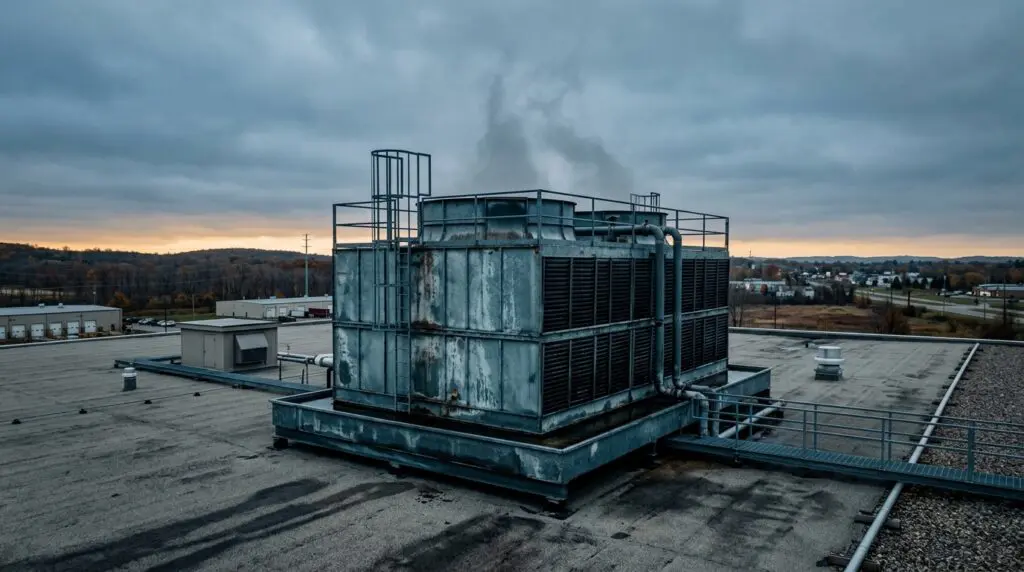
Eleven people died in New York City this summer. Cooling towers were the source. That’s the news. Here’s what it means for your facility.
The September-to-October shutdown window is the most overlooked point in a cooling tower’s Legionella risk cycle. Most of the professional attention goes to peak season management: biocide schedules, conductivity control, drift eliminator condition. Almost none goes to what happens when the system stops running.
Legionella bacteria thrive in stagnant water held between 68°F and 122°F, which is exactly the temperature range of a recently idled cooling tower in early fall. Shutdown doesn’t eliminate that risk. Without the right procedures, it extends it by five or six months.
Here’s what a proper fall shutdown protocol covers.
A shock biocide treatment followed by a full system flush before shutdown dramatically reduces the bacterial load left to grow undisturbed over winter. Most facilities only do this in spring. That means you’re sealing six months of growth potential into the system every fall.
Your water management plan should specify this step. If it doesn’t, update it before you close down.
Scale deposits, sediment, and biofilm feed whatever microorganisms remain after treatment. Mechanical cleaning of the basin, distribution deck, and fill media removes that substrate before it has months to develop. This is standard scope in most cooling tower service programs. It also surfaces any physical damage or fouling that the operating season masked, which means your spring startup inspection reflects real system condition, not months of undisturbed accumulation.
Take a sample before shutdown and log the result. This is your clean baseline for spring. It’s also the record that matters during a regulatory review or an insurance investigation if something goes wrong during the idle period. In facilities we work with, this step gets skipped constantly. It’s exactly what gets asked for first when there’s a problem. It rarely exists.
Most plans specify biocide schedules for cooling season and stop there. See what an ASHRAE 188 water management plan should include for layup and off-season monitoring.
See What a WMP Should Cover →Wet layup keeps the system filled with elevated inhibitor and biocide concentrations. Dry layup drains the system entirely. Both approaches carry tradeoffs around corrosion and Legionella risk. The wrong choice for your specific system is worse than either option done correctly. This decision should be made with your water treatment provider, not defaulted to whatever you did last year.
Wet layup systems hold standing water through the idle period. Legionella risk doesn’t disappear because the heat is off. Your water management plan should specify monitoring requirements during the off-season, including sampling frequency and responsible parties. Facilities using digital remote monitoring can keep visibility on idle systems without a site visit every month. If your plan doesn’t address the off-season explicitly, close that gap before you walk away for the season.
After a summer where cooling towers killed people in multiple cities, fall shutdown is a direct risk management decision. The facilities that treat it that way are the ones that start spring in a better position.
ChemREADY will walk your cooling tower, pull a sample, and tell you exactly what we find before you close for the season. No cost, no obligation.
Request a Free Water Analysis →A free water analysis includes a pre-shutdown system review: microbiological screening, biocide and inhibitor levels, and a layup recommendation built for your tower and your climate.
Schedule your free water analysis →Or call us directly: 800-229-6801
ASHRAE 188 compliant plans that specify shutdown disinfection, layup protocol, and off-season monitoring, not just cooling season.
Explore water management plans →Shutdown disinfection, mechanical cleaning, and spring startup handled as one program instead of two disconnected events.
See cooling tower services →Digital remote monitoring keeps eyes on an idle system through winter so you’re not guessing at what five months of standing water did.
See remote monitoring →