Reading Time | 10 Minutes
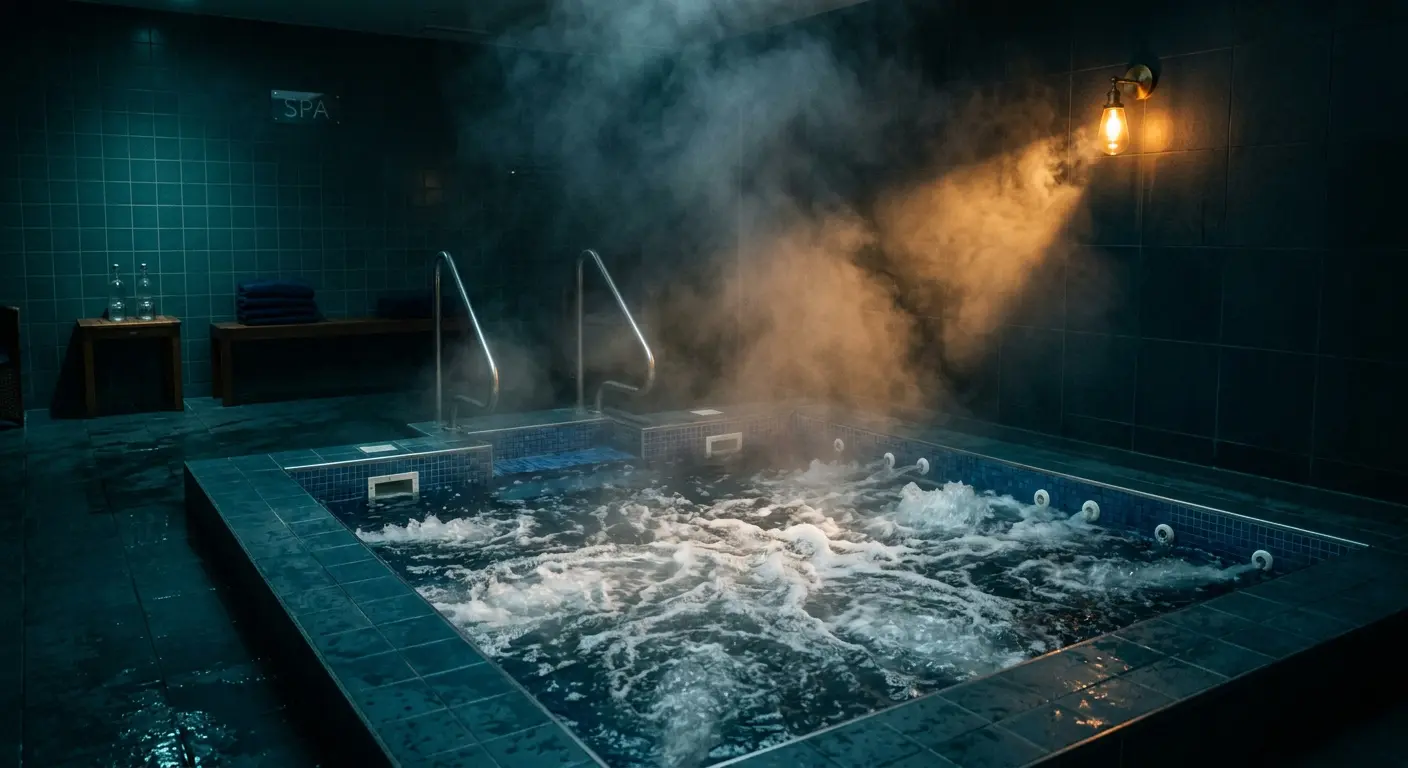
If your facility has a hot tub, spa, or decorative water feature, what just happened in Evanston, Illinois should prompt one question: when did you last verify that the system’s water management controls are documented, current, and actually being followed?
Two guests who used the pool and hot tub area at the Hilton Garden Inn North Shore/Evanston in August were diagnosed with Legionnaires’ disease. The pool, hot tub, and spa have been closed since September 2. After the Illinois Department of Public Health sampled the building on September 8, the city announced on September 18 that lab testing had confirmed Legionella in the water system associated with the hot tub. Samples from the rest of the hotel came back negative.
That last detail is the one that should get an EHS director’s attention. The building’s domestic water was clean. The problem was one piece of equipment, the one most facility water programs pay the least attention to. New York City has dealt with two cooling tower Legionnaires’ clusters this summer. This one is a hot tub, and that distinction matters for your facility’s exposure.
Hot tub Legionella risk is the likelihood that Legionella bacteria will colonize a spa or hot tub, multiply, and become airborne, creating a direct inhalation pathway for anyone in or near the water. Hot tubs are high-risk because they run at temperatures ideal for Legionella growth, constantly aerosolize water through their jets, and grow biofilm quickly on warm, nutrient-rich surfaces.
Unlike cooling towers, hot tubs are often run by hospitality or facilities staff rather than water treatment professionals. They’re frequently left out of the facility’s water management plan entirely, or covered by one line under “other water systems.” That gap is where outbreaks start.
Yes. Hot tubs are one of the building water sources most consistently linked to Legionnaires’ disease, alongside cooling towers, decorative fountains, and large plumbing systems. Evanston is only the latest example.
The mechanism is straightforward. Legionella grows best between 77°F and 113°F, and hot tubs run at 98–104°F, squarely in that range, all day. Hydrotherapy jets break water into droplets small enough to inhale deep into the lungs. Bathers sit with their faces inches above that aerosol for extended periods. Meanwhile, Legionella colonizes the biofilm that forms inside piping, jet housings, filter media, and on the shell itself, and it’s released whenever the water is agitated.
Legionella is already present at low levels in most water supplies. The question isn’t whether it will reach your hot tub. It’s whether your treatment program keeps it from multiplying once it’s there. For background on how the bacteria spreads, see six things you should know about Legionella.
ASHRAE 188 (Legionellosis: Risk Management for Building Water Systems) calls for buildings with higher-risk water features, including spas and hot tubs, to operate under a documented water management program. That program identifies where Legionella can grow and spread, sets control limits, and proves those controls are being met.
ASHRAE 188 is a voluntary consensus standard. It becomes mandatory when a code, regulator, or contract adopts it. CMS requires water management programs for healthcare facilities, for example, and some states and cities have their own rules. Even where it isn’t law, it’s the benchmark health departments, insurers, and plaintiffs’ attorneys use to judge whether a facility did what a reasonable operator should have done. The CDC toolkit on ASHRAE 188 lays out how to build one.
For a hot tub or spa, the program should include:
After an outbreak, investigators ask for the water management plan first and the monitoring logs second. If what’s written in the plan doesn’t match what was done at the tub, that gap becomes the liability. Our five steps to a better water management plan covers how to close it.
ChemREADY's Legionella specialists build and update ASHRAE 188–aligned water management plans that cover every system on site, including spas, fountains, and cooling towers, with control limits your staff can actually follow.
Explore Water Management Plans →Test disinfectant residual and pH at least twice a day, and as often as hourly during heavy use. That’s CDC’s guidance for commercial hot tubs. Legionella culture testing is risk-based rather than fixed by ASHRAE 188, but routine sampling on a set schedule is how you prove your controls are working. Here’s how a defensible monitoring program typically lays out:
| Parameter | Frequency | Target / Notes |
|---|---|---|
| Free chlorine or bromine residual | At least twice daily; hourly in heavy use | Chlorine 3–10 ppm or bromine 4–8 ppm, maintained continuously |
| pH | Same as disinfectant | 7.2–7.8 |
| Water temperature | Each check | Maximum 104°F for bather safety. Always in the Legionella growth range, so disinfectant must do the work |
| High-residual disinfection | Daily, out of service | 10 ppm free chlorine (or 10× combined chlorine, whichever is greater) for 1–4 hours |
| Drain, scrub, clean, refill | Commonly weekly to monthly, based on use | Removes biofilm that residual disinfectant can’t reach |
| Legionella sampling | Per your risk assessment; quarterly is common | Resample after any positive, maintenance event, or out-of-limit reading |
The key point: disinfectant readings don’t replace Legionella testing. A residual tells you what’s in the water right now. Legionella testing (culture, Legiolert, or qPCR) tells you whether bacteria have established themselves in biofilm, where residuals don’t reach. Any detection of live Legionella in a hot tub should trigger a review of the water management program and corrective action.
Preventing Legionella in hot tubs and water features is an ongoing managed program, not a one-time action. These are the core controls:
Hold disinfectant residual continuously. Keep free chlorine at 3–10 ppm or bromine at 4–8 ppm at all times, not just at opening. Bather load, heat, and sunlight all consume residual faster than staff expect. Automated chemical feed controllers hold residual and pH steady between manual checks and log every reading.
Control pH, because it controls chlorine. Chlorine kills through hypochlorous acid, and pH decides how much of your residual is in that active form. At pH 7.2, roughly two-thirds is active. At 7.8, it’s about one-third. At 8.2, it’s less than one-fifth. A tub reading 5 ppm at pH 8.2 has less real killing power than one reading 2 ppm at 7.2.
Don’t count on temperature. Hot tubs run inside Legionella’s growth range by design. Keep water at or below 104°F for bather safety, and treat disinfectant as your primary control. When a tub sits idle, stagnant piping becomes the risk. Flush and disinfect before returning it to service.
Run a daily high-residual disinfection. CDC recommends taking the tub out of service each day and holding an elevated chlorine level for one to four hours. This step knocks back bacteria before they can establish in biofilm, and it’s the one most often missing from facility logs.
Drain, scrub, and clean on schedule. Biofilm forms where residual can’t penetrate: behind filter media, inside jets, in dead-leg piping. Maintaining residual controls free-floating bacteria, but it doesn’t remove established biofilm. Only physical cleaning does.
Apply the same discipline to fountains and water features. Decorative fountains don’t run hot, but they spray aerosol, often in lobbies and atriums. They need a maintained disinfectant residual, regular cleaning to remove biofilm and debris, and their own line in the water management plan.
Document everything. In an investigation, records are the difference between a defensible position and a liability finding. If it wasn’t recorded, investigators will assume it wasn’t done. That’s true for hot tubs and cooling towers alike.
Pull your water management plan and answer these three questions:
The Evanston case fits a familiar pattern: a system in active use, presumably maintained at some level, that still produced confirmed illness. Hotels carry this risk more than most, which is why Legionella programs for hotels treat pools, spas, and guest-room plumbing as one connected exposure. The facilities that stay out of the news are the ones with documented controls and records showing those controls are working every week. If you’re not sure where to start, Legionella consulting can close the gap between the plan on paper and what happens at the tub.
ChemREADY runs Legionella sampling through certified partner labs, using culture, Legiolert, and qPCR, and trends the results so you can show investigators your controls work.
See Legionella Testing Services →Hot tub Legionella risk is the likelihood that Legionella bacteria will colonize a spa or hot tub, multiply, and become airborne, creating a direct inhalation pathway for users. Hot tubs are high-risk because they run at temperatures ideal for Legionella growth, constantly aerosolize water through their jets, and grow biofilm quickly on warm surfaces.
Yes. Hot tubs are one of the building water sources most consistently linked to Legionnaires’ disease. They operate at 98–104°F, inside Legionella’s 77–113°F growth range, and their jets create droplets small enough to inhale deep into the lungs. Legionella colonizes biofilm in piping, jets, and filters and is released whenever the water is agitated.
ASHRAE 188 calls for buildings with higher-risk water features, including spas and hot tubs, to operate under a documented water management program: a system description, hazard analysis, control limits, monitoring schedule, corrective actions, and verification records. It is a voluntary standard unless adopted by a code, regulator, or contract, but it is the benchmark investigators use after an outbreak.
CDC recommends testing disinfectant residual and pH at least twice per day, and as often as hourly during heavy use. Legionella sampling frequency should come from the facility’s risk assessment; quarterly is common, with resampling after any positive result, maintenance event, or out-of-limit reading.
Maintain a continuous disinfectant residual, control pH so chlorine stays effective, clean regularly to remove biofilm and debris, and give each hot tub, spa, or fountain its own entry in the facility’s water management plan with defined control limits, monitoring, and corrective actions. Document every test and cleaning.
Book a free on-site water analysis and a review of how your hot tubs, spas, and water features are covered in your plan.
Book Your Free Analysis →Or call 800-229-6801
On-site Legionella risk assessments that map every hazard point, from spas and fountains to domestic hot water and cooling towers.
Explore Risk Assessments →Chlorine, chlorine dioxide, and supplemental disinfection programs matched to your systems and your plan.
See Legionella Chemicals →