Reading Time | 10 Minutes
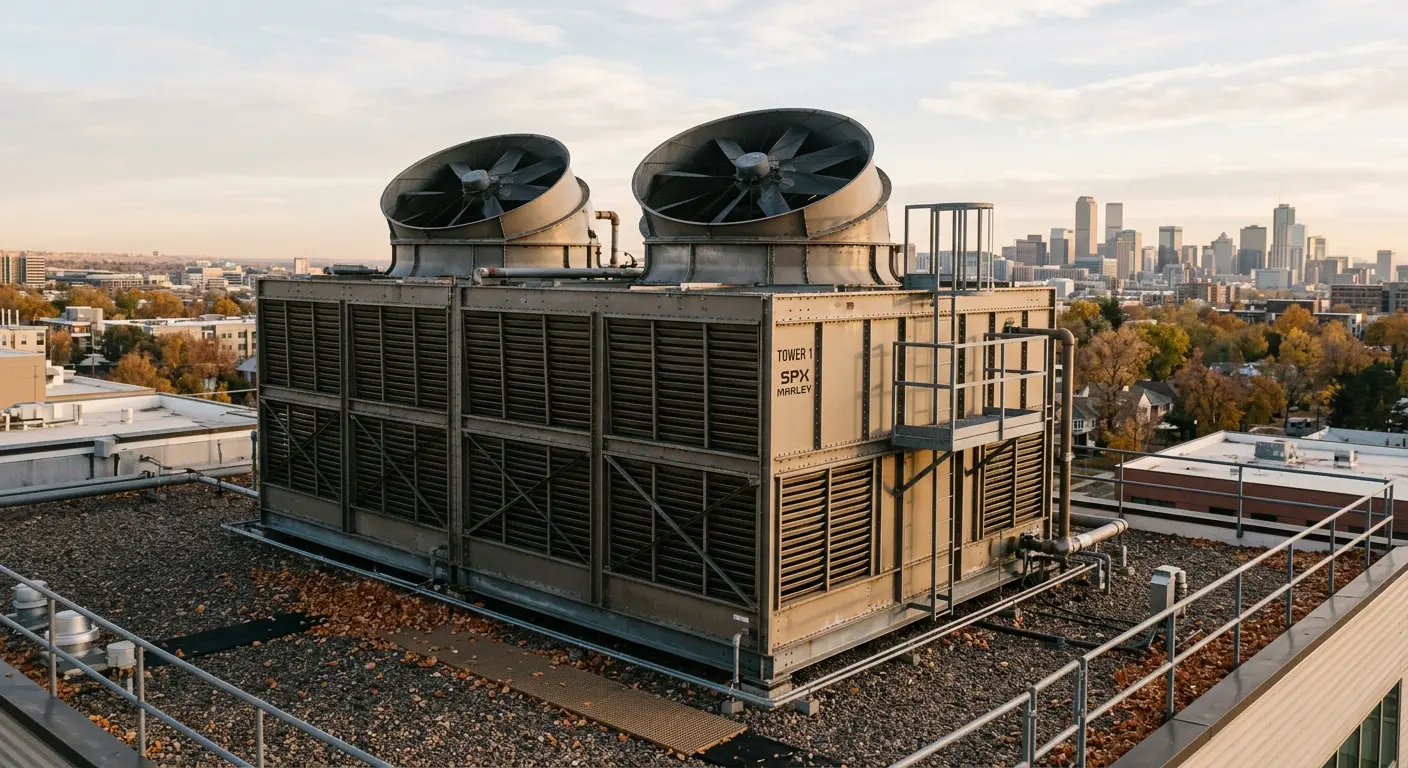
Two people died and at least 23 got sick in the South Bronx in September. New York City health officials found Legionella in 10 cooling towers in the area, seven of them with live bacteria, and ordered all 10 drained, cleaned, and disinfected. The outbreak was declared over on September 30. Testing to identify the source tower is still underway.
It was the city’s second community cluster of the year, after an Upper East Side outbreak that reached 94 cases and 11 deaths. And it isn’t only New York. Provisional CDC surveillance data put the 2025 national case rate at its second-highest level on record.
October is when cooling towers across the northern half of the country go offline for the season. That makes this the month your cooling tower Legionella shutdown protocol matters. Shutdown isn’t when people get exposed. It is when the conditions for next spring’s startup get set.
Legionella pneumophila is a waterborne bacterium that causes Legionnaires’ disease, a severe pneumonia that is fatal for about 1 in 10 people who get it, according to the CDC. People are infected by breathing in contaminated water droplets, not by drinking the water or by contact with another person.
Cooling towers matter because of reach. They hold warm, recirculating water and release it as aerosol by design. CDC notes that when Legionella is present, that aerosol can carry the bacteria for miles. That is why cooling towers are behind many of the largest community outbreaks, even though building plumbing is the more common outbreak source overall.
CDC identifies four factors that drive Legionella growth in a cooling tower. Each one gets worse in a tower that is shut off and left wet:
| Growth Factor | Operating, Treated Tower | Idle, Undrained Tower |
|---|---|---|
| Sediment and biofilm | Controlled by cleaning, filtration, and inhibitors | Settles in the basin and low points; biofilm sits undisturbed |
| Temperature | Managed against the favorable growth range of 77–113°F | Drops in winter, then climbs back through the growth range at spring startup |
| Water age | Turned over by makeup and blowdown | Stagnant for months |
| Disinfectant residual | Maintained daily by automated feed | Fades with no feed to replace it |
Fall shutdown creates Legionella risk because water, sediment, and biofilm left in an idle system over winter seed the tower when it warms back up in spring.
When a tower is turned off without being disinfected, drained, and cleaned, water stays in the basin, fill, distribution piping, and low points. Chemical feed stops and the residual fades. Cold doesn’t sterilize any of it. Legionella can persist in biofilm and sediment at temperatures too low for it to multiply.
Then spring arrives. Water temperature climbs back into the 77–113°F range, fans and pumps restart, and whatever overwintered in the system meets warmth, nutrients, and aeration at the same moment. That is why spring startup is the riskiest moment of the cooling season, and why what you do in October decides how much of that risk you carry into it.
CDC’s guidance reflects this. Its cooling tower toolkit calls for cleaning and disinfection before startup, when idling, and after shutdown, plus an offline cleaning and disinfection at least once a year. A tower that will hold water for less than five days can stay in wet standby, with treatment maintained and water circulated three times a week. A seasonal shutdown is not that.
A water management plan should spell out the shutdown steps, the dose, who does the work, and where the record lives. ChemREADY builds and audits Legionella water management plans to ASHRAE 188, for the system you actually have.
Build or Audit Your Water Management Plan →A cooling tower Legionella shutdown protocol should include five steps, in this order:
For reference, CDC’s emergency procedure, the one used when a tower is linked to illness, calls for at least 20 ppm of free oxidant up front and 10 ppm held for 24 hours, followed by draining, physical cleaning, and a second disinfection. A routine seasonal shutdown is less aggressive, but the order is the same: disinfect, drain, clean.
Yes. ASHRAE Standard 188 calls for a water management program in any building with a cooling tower or evaporative condenser, whoever occupies it. Section 7.2 of the standard covers cooling towers specifically, including procedures for start-up and seasonal shutdown.
ASHRAE 188 is a voluntary standard until a law adopts it, and several have:
Wherever you are, the practical test is the same. CDC tells operators to keep site-specific log sheets, procedures, service reports, and test results on site. A Legionella water management plan that lists a shutdown procedure nobody can show was performed isn’t protection. It is a record of the gap.
Investigators usually find a maintenance problem that was preventable. When CDC reviewed its own Legionnaires’ disease outbreak investigations, about 9 in 10 were caused by problems that more effective water management could have prevented. Process failures showed up in 65 percent of them and human error in 52 percent.
In the field, that looks like a gap between the plan and the work. The plan calls for biocide at shutdown, but the crew didn’t have the product or the target dose. The plan calls for basin cleaning, but the tower was already cold and the job felt low-priority. The plan was written three years ago and never updated after a cell was added.
What ChemREADY technicians regularly find when walking facilities without managed cooling tower services is that pattern exactly: documented procedures that no longer match the system, or that exist as checkboxes instead of field-verified work.
The South Bronx response shows how fast the clock runs once a cluster is declared. Towers tested positive on September 12, and the city ordered 10 of them drained, cleaned, and disinfected by that Monday. An owner in that position needs treatment logs, Legionella test results, and cleaning records in hand the same day. For how a program drifts to that point, see what the NYC outbreaks say about your cooling tower Legionella program.
If your tower is already closed for the season and the shutdown didn’t include documented disinfection and cleaning, you have two options.
Option 1: Go back in now. Have qualified personnel reopen the system. If water is still in it, disinfect, drain, and clean. If it was drained, inspect it, remove the sediment that was left behind, and close it up with a written record. This is more disruptive, but it leaves you with a defensible file and a cleaner start.
Option 2: Build it into startup. Write a pre-startup procedure that makes up for the missed fall work: a full cleaning and disinfection before the tower runs, a Legionella sample within the first two weeks of operation, and a decision made in advance about what you will do if that sample comes back positive.
Neither option is as clean as doing the fall shutdown correctly. Both are better than bringing up a system next spring with no record of what was done and no baseline test result.
The South Bronx outbreak is over. The next one is being set up now, in towers that are being turned off and left wet. Fall shutdown isn’t a maintenance chore. It is the first step of next year’s Legionella control program, and the record you create this month is the one you will be asked for if anything goes wrong in June.
ChemREADY's free on-site water analysis includes a look at your cooling tower and your seasonal procedures, so you know where you stand before the system sits idle all winter. No obligation.
Schedule Your Free Water Analysis →Legionella pneumophila is a waterborne bacterium that causes Legionnaires’ disease, a severe pneumonia that is fatal for about 1 in 10 people who get it, according to the CDC. Cooling towers are a risk because they hold warm, recirculating water and release it as aerosol. When Legionella is present, that aerosol can carry the bacteria for miles, which is why cooling towers are behind many of the largest community outbreaks.
A cooling tower Legionella shutdown protocol should include five steps in order: disinfect with an oxidizing biocide while the system is still circulating, drain the entire system including piping and low points, physically clean the basin, fill, and drift eliminators, inspect and repair damaged components, and lay the system up dry with a written record of what was done, when, by whom, and with what product and dose.
Yes. ASHRAE Standard 188 calls for a water management program in any building with a cooling tower or evaporative condenser, and Section 7.2 covers cooling tower procedures including start-up and seasonal shutdown. The standard is voluntary until a law adopts it. New York City and New York State build their cooling tower rules on Section 7.2, and New Jersey requires buildings with cooling towers to implement a water management program by December 12, 2026.
Fall shutdown creates a Legionella risk because water, sediment, and biofilm left in an idle tower over winter seed the system when it warms up in spring. Chemical feed stops, the disinfectant residual fades, and the water stagnates. Legionella can persist in biofilm and sediment at temperatures too low for it to multiply, then grow quickly once water temperature returns to the favorable range of 77 to 113 degrees Fahrenheit at startup.
Investigators usually find a preventable maintenance problem. A CDC review of its Legionnaires’ disease outbreak investigations found that about 9 in 10 were caused by problems more effective water management could have prevented, with process failures in 65 percent and human error in 52 percent. In practice that means missed biocide treatments, skipped cleanings, outdated procedures, and records that do not show the work was done.
Walk us through how your tower was shut down, or how you plan to do it. We’ll tell you what’s missing and what to document before it sits idle all winter.
Book a Conversation →Or call 800-229-6801
Treatment, testing, and seasonal cleaning from one team, so the shutdown in your plan is the shutdown that happens.
Explore Cooling Tower Services →Legionella testing on a schedule, with results you can hand to a health department the day they ask.
See Legionella Testing Services →Healthcare → Hotels → Multifamily Residential → Commercial →
