ChemREADY

Reading Time | 10 Minutes
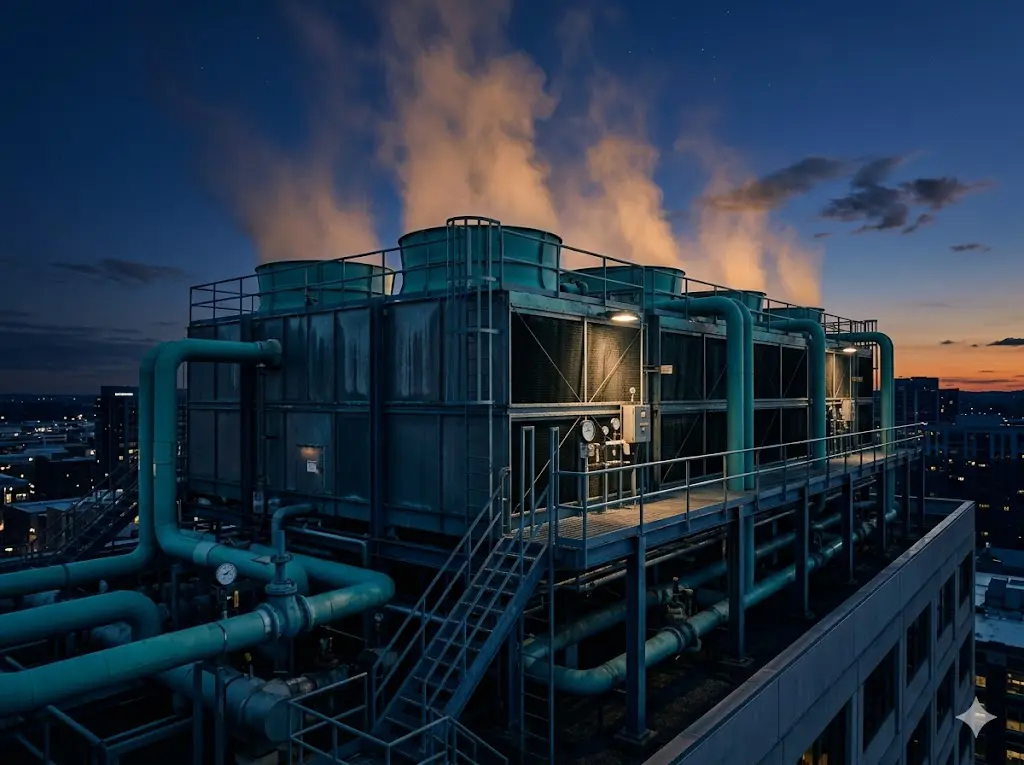
On June 5th, Legionella bacteria shut down St. Louis Public Schools’ district headquarters. Environmental testing found the bacteria in the building’s water and cooling systems. An employee was subsequently confirmed with Legionnaires’ disease.
This wasn’t a hospital. It wasn’t a hotel with a known water problem. It was an office building, closed because no one caught the issue before it became a public health event. If you’re an EHS director at a commercial or institutional facility, that should get your attention.
Use our free 15-point ASHRAE 188 self-assessment checklist to find out where your Legionella program actually stands — before a regulator does it for you.
Download the Free WMP Checklist →
Legionella pneumophila, the bacteria behind Legionnaires’ disease, grows in warm, stagnant water between roughly 77 and 113 degrees Fahrenheit. Cooling towers are one of the most common sources because they create exactly the conditions the bacteria needs: warm water, aerosol generation, and biofilm-friendly surfaces.
Building water systems are another common harbor: hot water storage tanks, low-use plumbing, decorative fountains. Most facility water systems have these conditions. The question is whether you have the controls in place to keep Legionella from taking hold.
Our free 15-point checklist covers everything ASHRAE 188 requires — from risk assessment and control limits to corrective action protocols and documentation. Find out where your gaps are now.
Get the Free WMP Self-Assessment →ASHRAE 188 is the industry standard for Legionella risk management. It requires facilities with high-risk water systems to develop and maintain a Water Management Plan (WMP). Most buildings with cooling towers qualify. The plan identifies where Legionella can grow, establishes control limits, and defines what happens when those limits are exceeded.
Many facilities have some version of water treatment in place. Very few have a water management plan that would hold up under scrutiny. The distinction matters most when someone gets sick and regulators come looking for documentation. And they will look.
In facilities we work with, this is one of the most consistently underestimated gaps. A chemical program exists, the cooling tower is managed on a schedule, but there’s no formal risk assessment, no defined action levels, no documented response protocol. That’s not a water management plan. It’s a routine that hasn’t been tested.
A plan built to ASHRAE 188 guidelines addresses: every water system that can harbor Legionella, control measures for each hazardous condition, monitoring schedules with defined responsible parties, and corrective action procedures when results fall outside acceptable limits.
Documentation is the piece most facilities underestimate. If a regulatory body comes looking after an incident, your records are your defense. If your Legionella treatment services provider isn’t generating that documentation on every visit, you don’t have it.
This is also where the gap between a chemical delivery schedule and a real Legionella water management plan becomes most visible. One is a calendar. The other is a defensible program. Learn more about what a compliant program includes on our Legionella services overview.

If you don’t have a current risk assessment, start there. Confirm whether your water treatment program includes testing against defined thresholds, or just chemical addition on a calendar. Know what your cooling tower’s disinfectant residual was last week and what the corrective action is if it falls out of range.
If those questions are hard to answer, that’s the answer. Legionella doesn’t announce itself in advance. The liability exposure for an under-documented water safety program is significant, and June is the peak growth season. Check your program now, while you still control the timeline.
For facilities in states with active Legionella legislation — including New Jersey’s S2188 — regulatory exposure is compounding. A documented WMP isn’t optional in those jurisdictions; it’s a compliance requirement.
If a regulator asks and you can't produce it, it doesn't exist. Download our free ASHRAE 188 checklist and find out exactly where your program stands across all 15 requirements.
Download the Free WMP Checklist →Book a 30-minute conversation directly. We'll discuss your building water safety and Legionella risk situation and whether working together makes sense.
Book a 30-minute call →Take a look at our Legionella treatment services first. See where you stand across your water safety plan, risk controls, and regulatory compliance posture — then decide if a conversation makes sense.
Find out what a buyer would see →Browse everything we do in building water safety and Legionella management — chemicals, programs, and compliance support — at your own pace, no conversation required.
Explore our water safety solutions →We work with advisors who encounter water safety and Legionella risk gaps in their client businesses. If you're looking for a referral partner for pre-sale readiness work, let's talk.
Learn about our partner program →