ChemREADY

Reading Time | 5 Minutes
An EHS director at a large hotel in the Northeast called us this spring. She’d been watching the Legionnaires’ outbreak on Manhattan’s Upper East Side (67 confirmed cases, two deaths, cooling towers confirmed as the source in more than 31 buildings) and it made her uneasy. Not panicked. Just uneasy enough to want someone to walk her system.
They had a water management plan on file. They had a vendor doing monthly treatments. On paper, everything looked right.
The water management plan, required under ASHRAE 188 and increasingly expected by state health departments and property insurers, was two years old and had never been updated after it was written. It still listed a cooling tower that had been replaced. It didn’t reflect a new wing of the hotel that opened 14 months prior.
Three high-risk distal outlets (the farthest, lowest-flow fixtures at the ends of the hot water distribution system) had no documentation of flushing in over a year. Regular flushing of those points is a basic control measure in any Legionella treatment program, because stagnant warm water at the end of a long line is exactly where Legionella bacteria thrive and multiply.
The cooling tower had been chemically treated every month. It had not been tested for Legionella in over a year.
The EHS director hadn’t known any of this. She had invoices showing monthly service visits. She had a signed WMP in a binder. She had reasonably assumed she was covered.
She wasn’t.
If your building has changed since the plan was written and nobody has revised it, the plan no longer describes your facility. ChemREADY builds and maintains ASHRAE 188 water management plans that stay current, with the testing records to back them up.
See How WMP Development Works →ASHRAE 188 requires more than a piece of paper. It requires an active program: documented control measures, regular testing, corrective action records, and a water management plan that stays current as the building changes.
What many facilities actually have is a WMP written once, filed, and never revisited. Monthly treatments happening, but no monitoring data to confirm they’re working. Nobody checking that the plan still reflects the actual building.
That gap is exactly where outbreaks start. It’s also exactly what an investigator or insurer looks for when something goes wrong.
We updated the WMP to reflect current building conditions. We built out a testing schedule: quarterly Legionella cultures on the cooling tower, six-month cultures on the hot water system. We documented the distal flushing program and created a simple log the hotel staff could maintain between our visits.
Six weeks later, one of the cooling tower samples came back Legionella-positive. It was caught early, remediated immediately, no one got sick, and the corrective action was fully documented, which matters, because it demonstrates the program was functioning, not failing.
If your water management plan is sitting in a binder and your vendor is dropping off chemicals without producing monitoring data, you don’t have a Legionella program. You have the appearance of one. Continuous monitoring closes part of that gap, but only if someone is reading what it produces.
That distinction matters a great deal more when regulators are paying attention. And right now, in the wake of a headline outbreak, they are.
ChemREADY offers a free on-site water analysis. We'll walk your system, test your water, and give you a plain-English report on what we find. No obligation.
Schedule Your Free Water Analysis →Or call us: 800-229-6801
Book a 30-minute conversation. We'll walk through your water management plan, testing records, distal flushing documentation, and cooling tower schedule — and tell you straight whether it would hold up under review.
Book a 30-minute call →Start with data instead of a conversation. Legionella culture testing on your cooling tower and hot water system tells you what your invoices can't — whether biological control is actually working right now.
Request Legionella testing →See what goes into an ASHRAE 188-compliant program — hazard analysis, control limits, validation testing, corrective action protocols, and documentation your team can maintain — before you talk to anyone.
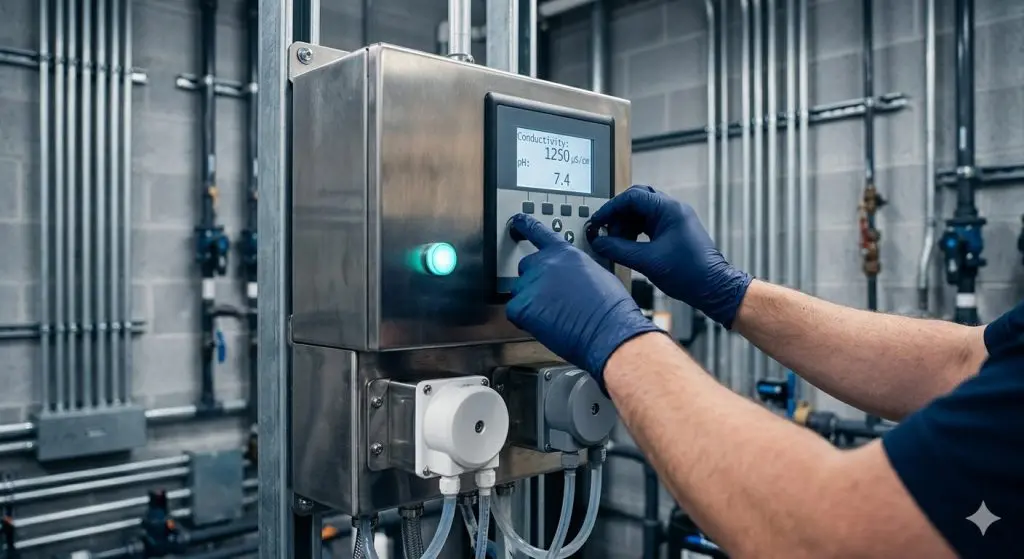
Explore our Legionella treatment services →We work with EHS and facilities teams managing WMP compliance across portfolios. Digital remote monitoring adds continuous temperature, conductivity, and biocide residual tracking with out-of-range alerts at every site — so control failures surface between service visits, not at the next culture result.
See how digital remote monitoring works →