Filter Press Inspection Guide: What to Look for on a Walkthrough | ChemREADY

Reading Time | 10 Minutes

Most filter press problems don’t announce themselves. They show up quietly, across a week or two, in small changes that operators adjust to without flagging. By the time a press goes down, the signals were there well before the failure.

You don’t need a process engineering background to catch those signals. They’re visible, or audible, or evident in the run data, if you know what to look for during a walkthrough you’re already doing. Here’s what to pay attention to.

The cake

A well-running filter press produces firm, dry cakes that fall cleanly at discharge. Wet, sticky cakes, sloppy at the edges, clinging to the cloth, or discharging inconsistently across the plate stack, are not normal variation. Something is off. It could be cloth condition, flocculant dosing, feed concentration, or press pressure. You don’t need to diagnose it on the spot. You need to notice it and flag it.

The filtrate

Filtrate is the liquid that passes through the filter cloth during a press cycle. It should be clear or nearly clear. Cloudy or milky filtrate means solids are passing through the cloth instead of being captured in the cake. This usually points to cloth failure, a damaged plate membrane, or a flocculant program that has drifted out of spec. If your discharge has water quality limits, cloudy filtrate isn’t just an equipment problem. It’s a compliance problem.

Cloudy filtrate is usually a chemistry problem before it's an equipment problem

Coagulant and flocculant selection determines how much solids your cloth actually captures. See how ChemREADY builds dewatering chemistry programs around the feed you're running.

Explore Flocculant Programs →

The cycle time

Filter press cycles have a baseline duration that reflects the press running correctly. If that time is creeping up, a press that ran 90-minute cycles now taking two hours or longer, something has changed. Cloth blinding, feed stream variability, and polymer dosing issues all show up in cycle time before they cause visible damage. Some facilities use digital remote monitoring to track this automatically rather than relying on operator recall.

Most operators know their press’s baseline cycle time. Ask them. If they’ve started accepting longer cycles as the new normal, that’s your signal.

The cloth condition

Filter cloths don’t announce when they’ve passed their service life. Look for heavy discoloration: brown or gray staining often indicates blinding from scale or biological fouling. Look for visible damage including tears, holes, thin spots, or areas where the fabric has distorted. A cloth that looks uniformly dirty isn’t necessarily done. One with localized damage, persistent wet spots on one section of the cake, or visible holes is. Cloth replacement and plate service are standard scope in a dewatering maintenance and support program.

The area around the press

Step back and look at the floor. Pooling filtrate, excessive dripping, or water tracking in unexpected directions can indicate the press isn’t sealing correctly between plates: a plate alignment issue or worn gaskets.

Pay attention to smell. A filter press handling organic sludge has an odor baseline. A sharp or sour change in that smell can indicate a shift in feed chemistry, a pH swing, elevated organics, or biological activity in the feed tank that’s affecting dewatering performance.

None of this requires specialized knowledge. It requires paying attention during a walkthrough you’re already doing. The facilities that catch these problems in week one instead of week six aren’t doing anything more. They’re just noticing more.
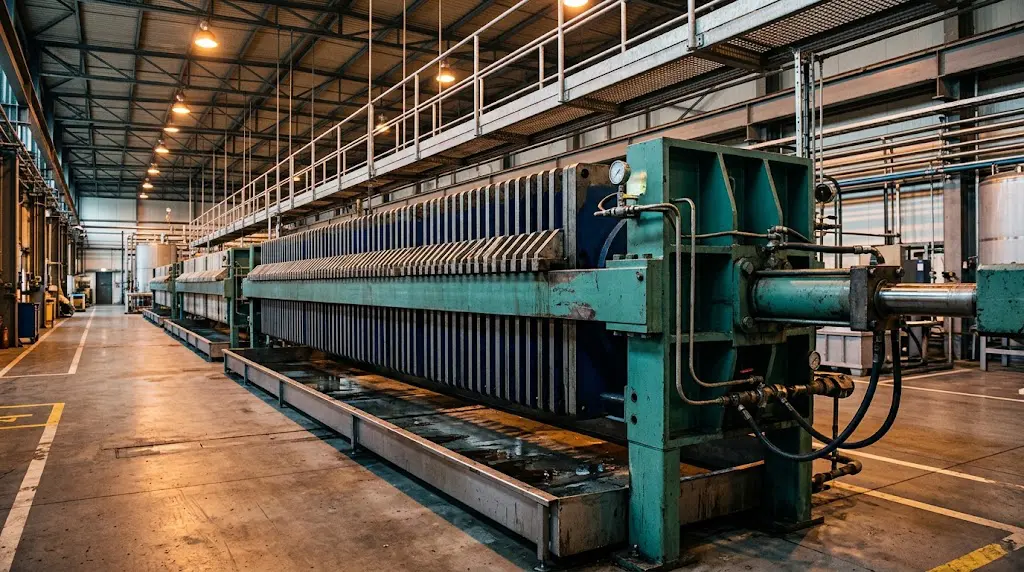

Walk your press area with someone who does this every week

ChemREADY will assess your dewatering operation, sample your filtrate, and tell you what your cake, cloth, and cycle times are actually saying. No cost, no obligation.

Request a Free Water Analysis →

Walk your press with someone who does this every week

A free water analysis includes a filter press performance review: polymer program, cloth condition, and a plain-English cost comparison of where you are vs. where you should be.

Schedule your free water analysis →

Or call us directly: 800-229-6801

What a filter press performance review covers

  • Whether your polymer dose is matched to your current feed
  • Filter cloth permeability and blinding condition
  • Cycle time and cake moisture against baseline
  • A cost comparison of current vs. optimized performance

Dewatering optimization consulting

Jar testing, polymer reoptimization, and a cloth cleaning protocol built around the sludge you’re actually filtering today.

Explore optimization consulting →

Polymer & flocculant programs

The right polymer, dosed correctly for your feed, is the single biggest lever on cake dryness and hauling cost.

See flocculant programs →

Filter press equipment & support

From presses to ongoing maintenance and support: the hardware and the program that keeps it running well.

See maintenance & support →