Filter Press Wet Cakes: It's Almost Always the Polymer

Reading Time | 5 Minutes

filter press

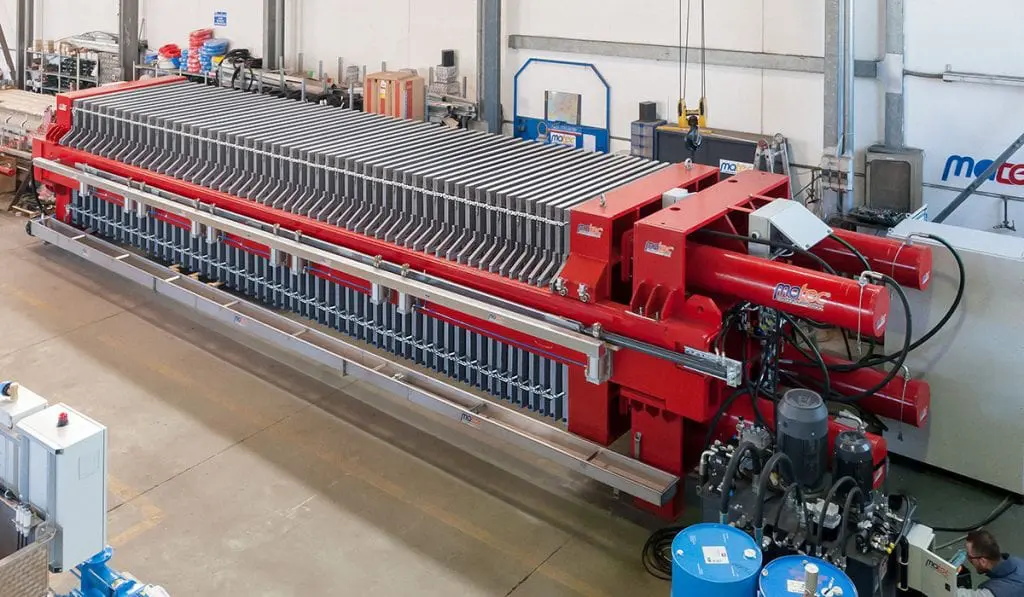
We hear this regularly. The cakes come out heavy and still dripping. Cycle times stretch to three hours, sometimes more. The cloth gets replaced. The problem comes back. Eventually someone starts looking at the press itself: the pump, the plates, the seals.

Usually, it’s not the press.

When a plant engineer at a food processing facility outside Cincinnati called us, he was 18 months into exactly this cycle. Three-hour press runs, wet cakes, two cloth replacements in a year. Two separate mechanical inspections. Everything checked out on the equipment side.

We asked him one question: when did you last evaluate your polymer?

The chemistry that determines whether your cake is dry or dripping

A filter press separates solids from liquid by forcing slurry through filter cloth under pressure. But before the slurry ever reaches the press, the particles need to be conditioned: flocculated into larger, more filterable clusters. That’s the polymer’s job.

Get the polymer right and you get a firm, dry cake with clean filtrate and reasonable cycle times. Get it wrong and the solids stay dispersed, the cloth blinds quickly, the filtrate runs cloudy, and the cake won’t dehydrate no matter how long you run the cycle.

The two variables that matter most are charge density (whether the polymer is cationic, anionic, or nonionic) and molecular weight. Both need to match the characteristics of your specific sludge. Change your process inputs, change your upstream chemistry, or shift the season, and the polymer that worked last year may not be right anymore.

In Cincinnati, the facility had been using the same polymer for two years without ever running jar testing to confirm it still matched their sludge. Their process had shifted, and the polymer’s charge density was no longer suited to the solids they were conditioning. Nobody had checked.

We ran jar testing on-site, identified the correct polymer type and dose rate, and within a week they were running cleaner cycles. Press time dropped by about 40 minutes per cycle.

When Was Your Polymer Last Actually Tested Against Your Sludge?

If the answer is "at startup," your chemistry may no longer match your process. ChemREADY's managed dewatering programs include on-site jar testing, polymer selection, and dose optimization tied to how your sludge actually behaves today.

Explore Our Dewatering Services →

What to check before you replace anything

If wet cakes are a recurring problem, work through these in order before spending money on equipment.

The polymer. Run jar testing. Confirm that charge density and dose rate match your current sludge characteristics. Don’t assume what worked during startup still applies.

Feed conditioning. Is the polymer mixing with the slurry long enough before it hits the press? Under-conditioning is as common as the wrong polymer, and just as damaging to cake quality.

Cloth condition. Blinded cloth won’t drain regardless of chemistry. But if you’re replacing cloth more frequently than expected, that’s usually a downstream symptom of a chemistry problem upstream, not the root cause.

Most facilities we work with have never had their polymer formally evaluated after initial startup. It gets set once and left alone, which is fine until something in the process changes. And something always eventually changes.

A press running fine mechanically but producing wet cakes is almost always a chemistry problem. It’s the right place to start. If your wastewater and discharge program depends on that filtrate running clean, the polymer is where the whole chain begins.

Not Sure What's Going On In Your Water System?

ChemREADY offers a free on-site water analysis. We'll walk your system, test your water, and give you a plain-English report on what we find. No obligation.

Schedule Your Free Water Analysis →

Or call us: 800-229-6801

Chasing wet cakes on a press that checks out mechanically?

Book a 30-minute conversation. We'll walk through your sludge characteristics, polymer program, feed conditioning, and cycle times — and tell you straight whether the fix is chemistry or something else.

Book a 30-minute call →

What to expect from a first conversation

  • We start with your process — sludge source, feed chemistry, current polymer, cycle times
  • We tell you whether your polymer is likely matched to your current sludge — or drifted
  • If your program is already dialed in, we'll say so
  • No scare tactics. No high-pressure close. Ever.
  • 30 minutes. You'll know exactly where you stand.

Not ready to talk yet?

Start with data instead of a conversation. Send us a sludge sample and we'll run jar testing — charge density, dose rate, floc quality — and show you what polymer your current sludge actually calls for.

Request jar testing on your sludge →

Want to explore on your own terms?

See what goes into a managed dewatering program — sludge characterization, polymer selection and dosing, feed conditioning, and ongoing performance monitoring — before you talk to anyone.

Explore our dewatering polymers →

Running presses across multiple facilities?

We work with plant and operations teams managing dewatering across several sites. Digital remote monitoring tracks feed and filtrate conditions continuously with out-of-range alerts — so polymer drift and conditioning problems surface before they turn into three-hour cycles.

See how digital remote monitoring works →