ChemREADY

Reading Time | 10 Minutes
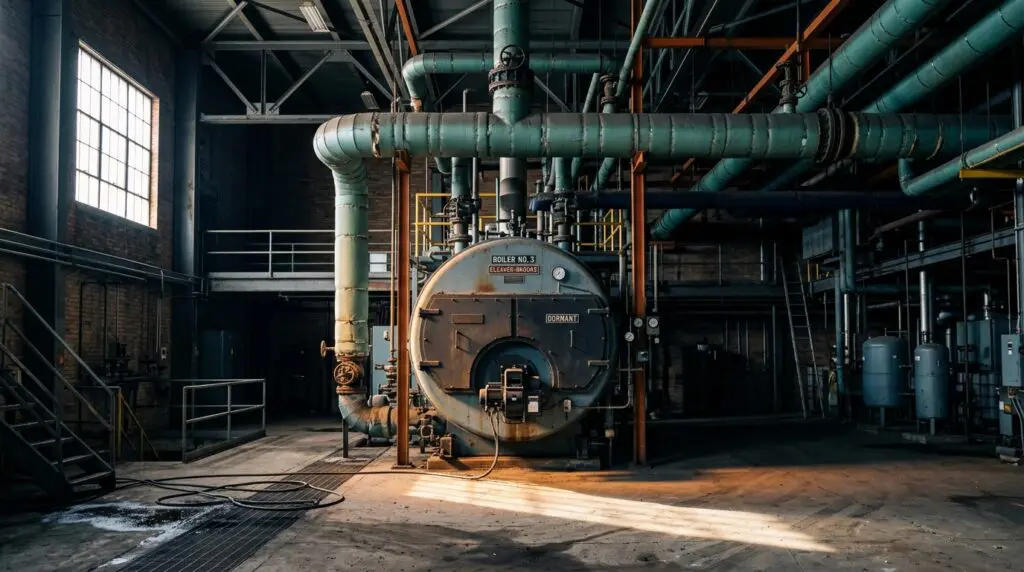
Most facilities treat boiler startup like flipping a switch. The season changes, heat is needed, and the boiler comes back online. What happened inside the system while it sat idle all summer doesn’t get much thought.
That’s a problem. A boiler that’s been off since spring isn’t in the same condition it was when you shut it down. Oxygen pitting, scale accumulation, and condensate line corrosion all advance during idle periods, quietly, without triggering any alarms, and without being visible until something fails.
Scale as thin as 1/32 of an inch can reduce boiler heat transfer efficiency by 10 to 15 percent, according to the U.S. Department of Energy. That’s before accounting for the hardening effect of a full summer idle. Scale deposited during the last heating season becomes significantly denser and harder to remove after months of sitting undisturbed.
Dissolved oxygen in residual standing water attacks metal surfaces and leaves pitting corrosion that won’t be visible until it shows up as a tube failure or unexplained pressure loss. Condensate return lines are especially vulnerable. If the system wasn’t flushed and treated with the right corrosion and scale inhibitors before spring shutdown, you can have active oxygen corrosion running through return piping for months before the boiler fires for the first time.
Start with a water chemistry test. You want to know what’s actually in the system before you introduce heat. pH, alkalinity, dissolved oxygen, conductivity, and inhibitor concentration all need to be within spec before startup, not assumed to match wherever they were in spring.
Check your chemical feed equipment. Pumps, controllers, and conductivity probes can drift or fail during months of non-use. A probe reading incorrectly will let your treatment program run out of spec from the first hour of operation. If your blowdown program hasn’t been recalibrated since last season, that’s part of the same conversation.
Inspect the condensate return system. Orange-tinged water at the condensate receiver means iron, which means oxygen corrosion has been active. Check return line condition at low points where condensate would pool. Catching this before startup is a much cheaper conversation than after a tube failure mid-January.
What our technicians typically find on a boiler coming out of summer idle is a combination: scale heavier than expected, inhibitor depletion, and at least one feed system component not functioning correctly. None are catastrophic individually. Together, they set up a difficult start to heating season.
Chemistry testing, feed equipment verification, and condensate inspection before you fire up. See what a ChemREADY boiler treatment program covers.
Explore Boiler Services →Chemistry requirements shift with boiler load, fuel cost, and equipment age. A program calibrated for your boiler three years ago may not be the right one now. Facilities running digital remote monitoring catch that drift as it happens instead of discovering it at startup.
Your boiler program should include a pre-season water analysis that establishes real system condition before you commit to another heating season on the same chemistry. The inhibitors you’re running need to match the water you’re actually treating, not last year’s baseline.
If something needs to change, September is the time to find out. Not January.
ChemREADY will test your system, check your feed equipment, and tell you what the summer did to it. No cost, no obligation.
Request a Free Water Analysis →A free water analysis includes a pre-season boiler review: full chemistry panel, feed equipment verification, and a condensate return inspection before you fire up.
Schedule your free water analysis →Or call us directly: 800-229-6801
Program design, blowdown control, and pre-season startup support built around the boiler you’re actually running today.
Explore boiler services →1/32 of an inch of scale costs you 10 to 15 percent of your heat transfer. The right inhibitor program is the cheapest efficiency you’ll buy this season.
See inhibitor programs →A probe reading wrong from hour one puts your whole program out of spec. Calibrated controls keep the treatment doing what you paid for.
See controllers & automation →