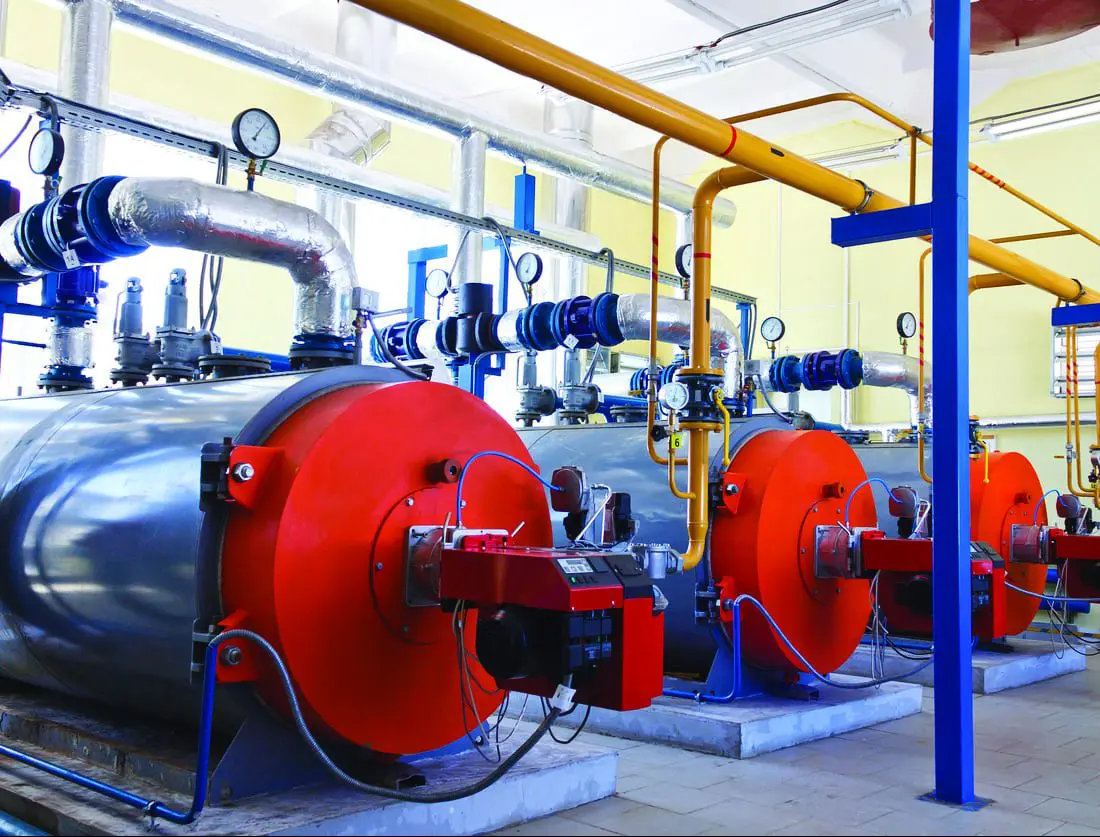
Alkalinity in boiler water is the water’s capacity to neutralize acid, supplied by carbonate, bicarbonate, and hydroxide. It is measured by acid titration and reported as P, M, or T alkalinity in mg/L as CaCO₃. Held inside the right band, it protects steel from corrosion; outside it, foaming, carryover, and embrittlement follow.
Monitoring alkalinity in boiler water protects efficiency, safety, and asset life. When alkalinity drifts, corrosion, embrittlement, foaming, and carryover start to show up. Cooling systems feel it too, as scale and corrosion treatments lose bite outside the right window. Stay inside the control band and the plant runs cleaner, steadier, and with lower fuel spend.
For the basics of how alkalinity buffers pH in any water system, start with our alkalinity primer.
What Are the Three Forms of Alkalinity?
Alkalinity appears as three species, with the balance driven by pH.
Carbonate (CO₃²⁻).
Bicarbonate (HCO₃⁻).
Hydroxide (OH⁻).
Total alkalinity is the sum of these contributors. You measure it by titrating a sample with standard acid and reading defined endpoints. Results are expressed as P, M, or T alkalinity and reported as mg/L as CaCO₃.
Measurement
Titrate to
Indicator
P alkalinity
pH 8.3
Phenolphthalein
M alkalinity
pH 4.6
Methyl orange
T alkalinity
pH 4.5
Total alkalinity indicator
P, M, and T alkalinity at a glance
You can use standard relationship tables to interpret carbonate/bicarbonate/hydroxide splits and to confirm treatment impact. These tables help verify whether caustic addition, deaeration changes, or softening steps are delivering the expected shift.
What Alkalinity Range Should a Boiler Run At?
Target ranges below are general industry guidelines. Always confirm setpoints against your boiler manufacturer’s specifications and your water treatment program.
Boiler pressure (psi)
M alkalinity target (mg/L as CaCO₃)
P alkalinity notes
Key risk if out of range
0–150 (low pressure)
100–700
P should be 25–40% of M; excess OH⁻ acceptable within range
Low: corrosion. High: foaming, carryover
151–300
100–500
Keep OH⁻ above 150 mg/L for passivation; watch carbonate split
Boiler water alkalinity target ranges by pressure class (general industry guidelines)
Boiler season is here
Struggling to Hold Alkalinity in the Control Band?
Heating-season load and makeup changes are when alkalinity drifts. Get your water chemistry, blowdown, and treatment program dialed in now and avoid a mid-winter shutdown.
Caustic embrittlementhigh alkalinity at 301–600 psi
How Is Boiler Alkalinity Control Set and Held?
Treatment specialists target M (or T) alkalinity below the boiler maker’s limit for the pressure class. Higher pressures call for higher purity and tighter control. Enough OH⁻ alkalinity is still required to protect steel and keep hardness from plating out; a common target sits above 150 mg/L as CaCO₃ within the manufacturer’s guidance. That balance supports passivation, stabilises pH, and limits scale growth on hot surfaces.
Cooling water notes
Low alkalinity invites corrosion. High alkalinity invites calcium carbonate scale. A steady mid-band supports inhibitor packages and keeps heat transfer stable.
Helpful tool: pH treatment solutions such as pHREADY can steady pH and alkalinity when load or water quality moves around.
Boiler services
Need Reliable Alkalinity and pH Control in Your Boiler System?
From routine monitoring to treatment adjustments, ChemREADY supports boiler and cooling water programs that protect equipment, improve efficiency, and reduce unplanned downtime.
5If required, verify T alkalinity at pH 4.5 with the total indicator.
6Record mg/L as CaCO₃, time, location, and operator initials, then trend.
Consistent technique beats sporadic testing. Small, frequent checks catch drift before it becomes downtime.
What Interferes With Alkalinity Testing?
Highly turbid or coloured samples can hide the endpoint.
Free chlorine alters the titration result.
Suspended solids and colloids skew readings.
Some polymers read as M and T alkalinity.
CO₂ absorption during handling depresses alkalinity.
Acid dosing upstream shifts the P/T relationship.
Practical Fixes That Work On Site
Problem
Fix
Dechlorination
Add sodium thiosulphate before titration to neutralize chlorine.
Clarification
Remove suspended solids with paper filtration; use syringe filters for colloidal color.
Polymer systems
Expect polymers to titrate as M and T; for OH alkalinity, titrate directly using the barium chloride method.
Avoid 2P–M bias
The 2P–M shortcut under-reads OH in polymer-treated waters; use the direct OH method instead.
Limit CO₂ uptake
Analyze at the sample point where possible.
Off-site samples
Fill bottles to overflowing and cap tightly; run tests promptly on arrival.
Process acid
If acid is being added for pH control, revisit the P/T interpretation, as the relation shifts under acid feed.
On-site fixes for common alkalinity test interferences
Odour present during testing
Tackle the source and stabilise chemistry with pHREADY for Odour Control, which can help while you hold the required alkalinity band.
What Control Actions Keep Boiler Systems Reliable?
1Set monitoring frequency by pressure, load, and history.
2Tie caustic and conditioning feeds to alkalinity trend, not guesswork.
3Match blowdown to solids load and conductivity, then recheck alkalinity.
4Review deaerator performance and makeup quality whenever trend lines wobble.
5Document setpoints, endpoints, and corrective actions in the shift log.
Quick reference ranges and notes
Target ranges vary by pressure class and supplier guidance.
Low-pressure packages often allow a wider band for M/T values.
High-pressure units require tighter limits and cleaner makeup to protect turbines and superheaters.
Keep OH⁻ in the protective zone and keep total alkalinity inside the maker’s stated limits for the duty.
Year-end water treatment check
Don’t let scale and corrosion take your boiler system offline.
Close out 2026 with a year-end water treatment check. We’ll review your alkalinity trend, blowdown, and treatment program and send a plain-English report.
Frequently Asked Questions About Boiler Water Alkalinity
What is the difference between P alkalinity and M alkalinity in boiler water?+
P alkalinity is measured by titrating a boiler water sample to pH 8.3 using phenolphthalein. M alkalinity continues the titration to pH 4.6 using methyl orange. Both are reported as mg/L as CaCO₃, and standard relationship tables use them to split carbonate, bicarbonate, and hydroxide.
What alkalinity should a low-pressure boiler run at?+
For boilers at 0–150 psi, a general industry guideline is 100–700 mg/L M alkalinity as CaCO₃, with P alkalinity at 25–40% of M. Always confirm setpoints against your boiler manufacturer’s specifications and your water treatment program.
What happens if boiler water alkalinity is too low?+
Low alkalinity invites corrosion: general corrosion in low-pressure boilers, pitting at 151–300 psi, and acidic attack at 301–600 psi. Enough OH⁻ alkalinity is required to protect steel and keep hardness from plating out; a common target sits above 150 mg/L as CaCO₃ within the manufacturer’s guidance.
What happens if boiler water alkalinity is too high?+
High alkalinity causes foaming and carryover in low-pressure boilers, priming and turbine contamination at 151–300 psi, and caustic embrittlement risk at 301–600 psi. Treatment specialists target M (or T) alkalinity below the boiler maker’s limit for the pressure class.
What causes low alkalinity in boiler water?+
Common causes are bicarbonate breakdown, where bicarbonate in makeup water decomposes under heat to CO₂ gas and is vented off; excessive blowdown that removes boiler water without adequate makeup alkalinity replacement; and makeup water with naturally low alkalinity.
Why does the 2P–M shortcut under-read hydroxide alkalinity?+
In polymer-treated waters, polymers titrate as M and T alkalinity, so the 2P–M shortcut under-reads OH. For OH alkalinity, titrate directly using the barium chloride method instead.
How often should boiler water alkalinity be tested?+
Set monitoring frequency by pressure, load, and history. Consistent technique beats sporadic testing: small, frequent checks catch drift before it becomes downtime.
Buyer’s guide
Evaluating boiler water treatment programs?
A practical buyer’s guide covering chemistry, service levels, and total cost of ownership before you sign anything.
Are you an M&A advisor or PE firm? We work with advisors who encounter infrastructure gaps in client businesses. If you’re looking for a referral partner for pre-sale readiness work, learn about our partner program.
Written for WaterFACTS by the ChemREADY boiler water treatment team.
Technically reviewed by the ChemREADY boiler services team. Last reviewed July 2026.
Year-end water treatment checkIs your boiler ready for winter?We’ll check your boiler water chemistry and treatment program and send a plain-English report. No obligation.