Reading Time | 10 Minutes
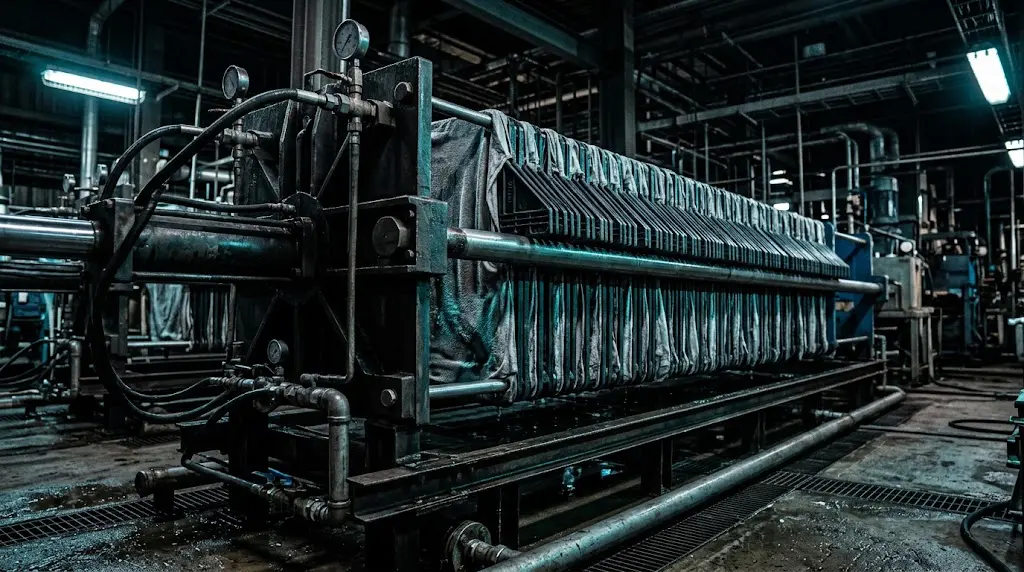
In January, a manufacturing facility was spending about $8,000 a month hauling dewatered sludge. By May it was $11,400. By July it was pushing $13,000.
Nothing had obviously changed. The filter press was still running. The same polymer was arriving on the same schedule. Nobody had flagged a problem because nothing had visibly broken.
The issue was that the filter press had quietly gotten worse — and nobody was measuring it. By the time the hauling invoice told the story, the problem had been compounding for six months.
A free ChemREADY water analysis includes a filter press performance review. We'll identify whether polymer dosing, cloth condition, or feed chemistry is behind the drift.
Schedule your free water analysis →A filter press produces wet cakes — heavier-than-normal compressed solids — when the dewatering process fails to remove adequate water from the sludge feed before the cake discharges. The three most common causes are incorrect polymer dosing for the current feed characteristics, filter cloth blinding that restricts water passage through the cloth, and feed concentration changes that the chemical program was not adjusted to address.
Each of these causes produces a similar symptom — wetter, heavier cakes — but requires a different corrective action. Identifying which cause is driving performance requires testing the feed, evaluating polymer performance at current dosing rates, and inspecting cloth condition. Without active monitoring, these causes are invisible until the hauling invoice quantifies the cost.
Polymer is the chemical used to condition sludge before it enters the filter press — often alongside a coagulant — causing fine suspended solids to aggregate into larger flocs that dewater more efficiently under pressure. A correctly dosed polymer program produces dense, cohesive floc that releases water readily through the filter cloth. An incorrectly dosed program produces either under-conditioned sludge (weak floc, poor dewatering) or over-conditioned sludge (sticky floc, cloth blinding).
Signs that polymer dosing is off for the current feed include:
Filter cloth blinding occurs when the pores in a filter press’s filter cloth become clogged with fine particles, polymer residue, or mineral deposits, reducing the cloth’s permeability and restricting water passage during the filtration cycle. A blinded cloth produces wetter cakes, longer cycle times, and reduced throughput even when polymer dosing is correct.
Blinding happens gradually. A cloth that is 20% blinded may still appear functional — the press cycles, cakes discharge — but water passage is restricted enough to measurably reduce cake dryness. By the time blinding is severe enough to notice visually, the performance loss has usually been building for months.
In the facility in this story, cloth permeability testing confirmed that the cloths were passing water at roughly 60% of their design rate. That 40% restriction translated directly into wetter cakes and additional hauling loads every day the press ran.
A scheduled cloth cleaning protocol — specific to the chemistry of the sludge being filtered — restores permeability and is typically far less expensive than cloth replacement. Most facilities that don’t have an active filter press optimization program have no cloth cleaning schedule at all.
The math on filter press hauling cost reduction is usually straightforward once the problem is identified. Here’s what it looked like in the facility from this story:
| Metric | Before | After | Change |
|---|---|---|---|
| Monthly hauling cost | $13,000 | $8,200 | -$4,800/mo |
| Average cake moisture | 38% | 28% | -10 pts |
| Cycle time per run | 95 minutes | 74 minutes | -21 min |
| Cycles per day | ~11 cycles | ~9 cycles | -18% (same throughput) |
| Polymer cost per ton | $42/ton | $38/ton | -$4/ton |
| Time to recover reoptimization cost | — | — | < 3 weeks |
The hauling cost savings of $4,800/month represent a 37% reduction from the July peak. The polymer cost per ton also decreased — a counterintuitive result that reflects the efficiency gain when polymer dose is matched correctly to feed characteristics.
This is the distinction that determines whether a filter press program actively protects facility economics — or just keeps chemicals stocked.
A polymer supplier drops off product on a schedule. An active dewatering program has someone responsible for whether the chemistry is working — for the specific sludge being processed today, not the sludge from six months ago when the program was last looked at.
The facility in this story was paying for a chemical delivery and getting no active management of the feed-polymer match, the cloth condition, or the performance trend. The polymer was showing up. Nobody was checking if it was working.
| Chemical Delivery | Managed Dewatering Program | |
|---|---|---|
| Testing frequency | Quarterly or less | Monthly minimum; after any feed change |
| Polymer dose adjustment | Fixed from initial setup | Adjusted when feed character or volume changes |
| Cloth performance monitoring | Not included | Regular permeability checks and cleaning schedule |
| Cycle time tracking | Not included | Tracked and trended; deviations trigger investigation |
| Cake moisture monitoring | Not included | Periodic testing; correlated with polymer performance |
| Documentation | Chemical invoices only | Service reports with readings, trends, and corrective actions |
| First signal of a problem | Hauling invoice increase | Cycle time or filtrate quality deviation — before cost impact |
The reoptimization for the facility in this story involved three steps: characterize the current feed sludge, run jar testing to determine the optimal polymer dose and type for the current feed, and implement a cloth cleaning protocol using a chemistry appropriate for the sludge being filtered.
The service time was a fraction of one month’s hauling overage. The cost recovery happened in under three weeks.
That math holds up almost every time we see this situation. The harder cost — the one that doesn’t show up on a service invoice — is the months of hauling overage that accumulated before anyone looked closely at the filter press program. This is the same pattern we cover in how sludge variability throws off your filter press.
If your hauling costs have been climbing without a clear explanation, the filter press program is worth a close look. The press running is not the same as the press running well, and the difference shows up on your invoice long before it shows up anywhere else.
ChemREADY's free water analysis includes a filter press performance review — polymer optimization, cloth condition assessment, and a cost comparison of where you are vs. where you should be.
Schedule your free water analysis →A free water analysis includes a filter press performance review — polymer program, cloth condition, and a plain-English cost comparison of where you are vs. where you should be.
Schedule your free water analysis →Or call us directly: 800-229-6801
Jar testing, polymer reoptimization, and a cloth cleaning protocol built around the sludge you’re actually filtering today.
Explore optimization consulting →The right polymer, dosed correctly for your feed — the single biggest lever on cake dryness and hauling cost.
See flocculant programs →From presses to ongoing maintenance and support — the hardware and the program that keeps it running well.
See maintenance & support →