ChemREADY

Reading Time | 10 Minutes
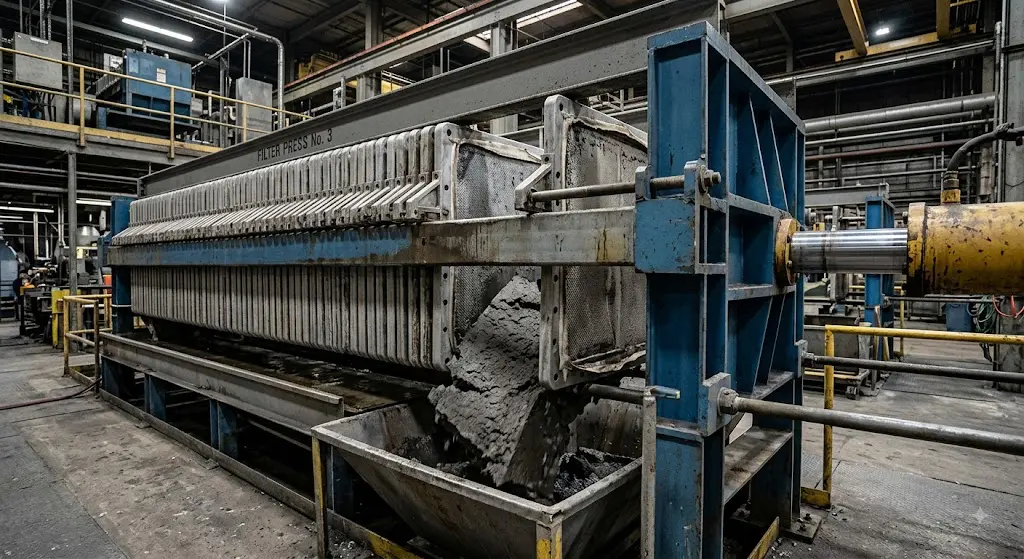
Your filter press hasn’t changed. Your polymer program hasn’t changed. But the cake is coming off wet, cycle times have stretched, and the filtrate is cloudier than it was last month. When filter press performance problems show up with no obvious operational cause, the equipment is rarely where the answer lives.
Usually, the sludge did it.
Sludge variability is the natural fluctuation in sludge composition — solids concentration, particle size, and surface chemistry — that happens when upstream production processes, raw materials, or seasonal conditions change. In industrial dewatering, it is the leading cause of unexplained filter press performance decline, because polymer dosing and press parameters are both calibrated to a specific baseline profile.
Polymer dosing isn’t a guess. It’s calculated around the composition of your sludge: solids concentration, particle size distribution, and the surface chemistry of those particles. The press operating parameters — feed pressure ramp rate, squeeze cycle duration, maximum operating pressure — were all dialed in around a baseline sludge profile.
When that profile shifts, everything tuned to it goes out of spec at the same time.
A short conversation with our team can tell you whether an upstream shift is what's showing up at your press — before it costs you another off-spec batch.
Talk to Our Dewatering Team →Most sudden filter press performance drops trace back to a change in the sludge feed, not the press itself. Sludge composition shifts more often than most facilities realize — and every one of those shifts arrives at the press as a symptom. Production volume swings affect solids loading. Raw material substitutions change what’s in the waste stream. Seasonal temperature moves alter biological activity in holding tanks. A pH correction upstream, a new cleaning chemical, or a change in coagulant dosing all end up at the filter press.
The press doesn’t see the cause. It just shows you the effect:
| Upstream Change | Effect on Sludge | Press Symptom You See |
|---|---|---|
| Production increase | Higher solids loading | Long cycles, wet cake |
| Raw material swap | Changed particle size | Poor cake formation |
| Upstream pH correction | Particle surface charge shift | Polymer under- or over-dose |
| Seasonal temperature rise | Biological activity change | Variable viscosity, inconsistent cycle times |
| New cleaning chemical | Surfactant carryover | Cloth blinding, foam |
Wet cake is most often the result of under-dosed polymer. When the dose no longer matches the sludge, fine particles that should bind into the cake matrix stay mobile, pass through the cloth into the filtrate, and cake formation suffers. What comes off the press is soft, wet, and expensive to haul.
Over-dosing creates its own problems: sticky cake that won’t discharge cleanly, excess polymer coating the cloth and accelerating blinding, and wasted chemical spend on top of degraded output. Bumping the dose higher isn’t a fix for a variability problem — it’s a cost that compounds without resolving the root cause. For more on how this surfaces day to day, see our post on filter press performance and polymer problems.
If the dose keeps climbing and the cake stays soft, the problem isn't the dose — it's the variability underneath it. We can help you find it.
Get Help With Your Filter Press →When performance drops, the natural place to look is the press itself: cloth condition, plate sealing, hydraulic pressure. Those are worth checking. But in the facilities we work with, one of the most consistent causes of sudden, unexplained decline is a sludge feed that changed upstream — and nobody connected it to what was happening at the press.
Production volumes shift. A raw material gets swapped. A process chemical is adjusted somewhere in the line. Those changes travel downstream and arrive at the filter press last. The equipment reveals the problem. It didn’t create it.
You can stay ahead of the problem instead of working backward from a bad batch:
A filter press that runs consistently doesn’t happen by accident.
We'll help you connect what's happening upstream to what you're seeing at the press — and build a dewatering program that adjusts before performance slips. No obligation.
Start a Conversation →ChemREADY offers a free on-site water analysis — we’ll walk your process, test your water and sludge, and give you a plain-English report on what’s driving your press performance. No obligation.
Schedule Your Free On-Site Analysis →Or call us: 800-229-6801
Polymer issues are where sludge variability shows up first. See how polymer problems surface in filter press performance →
A managed program adjusts to what your sludge is actually doing. See how ChemREADY manages industrial dewatering →
We also handle water treatment, water safety and Legionella, and wastewater. Tell us what you run and we’ll point you to the right team →