Reading Time | 10 Minutes
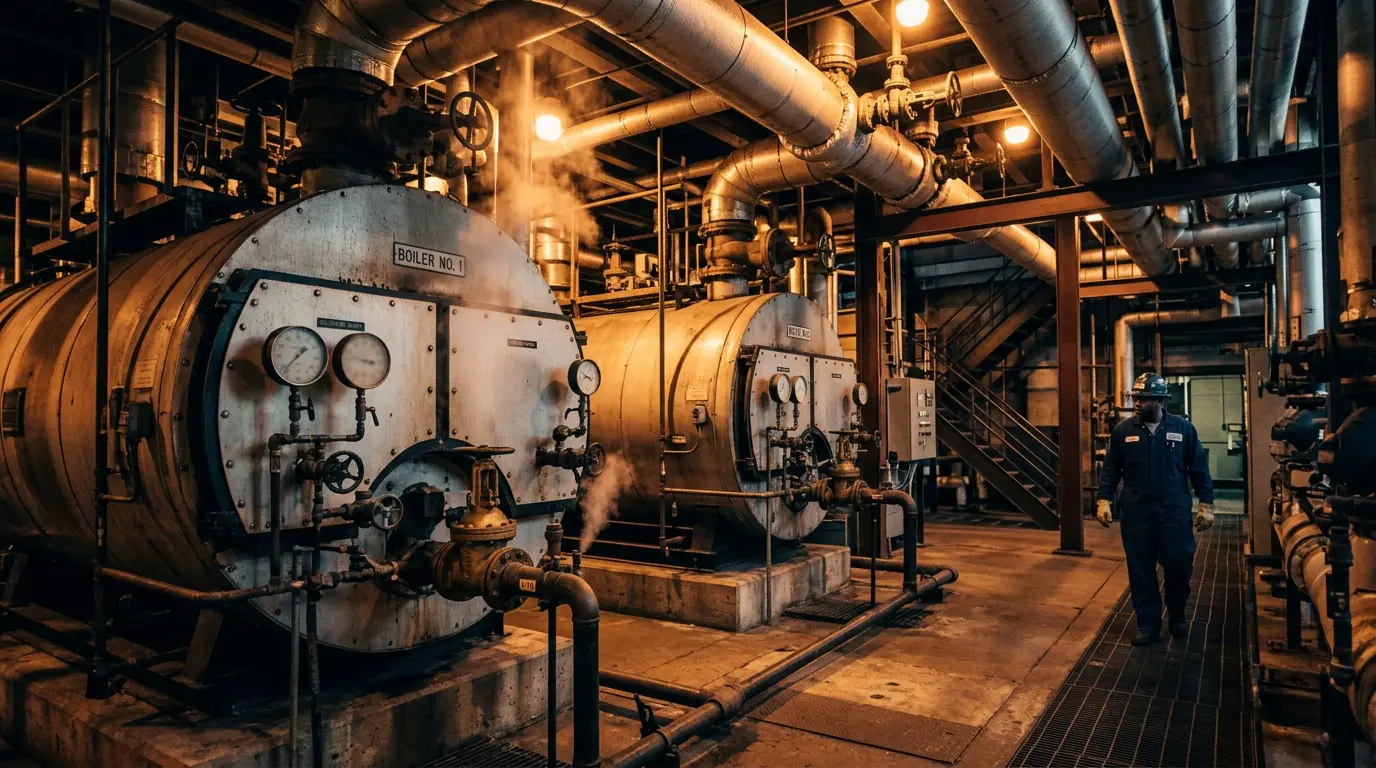
Every fall, plant engineers look for ways to conserve energy heading into heating season, and boiler blowdown heat loss looks like an easy target. A tighter blowdown schedule keeps more hot, treated water in the boiler instead of sending it down the drain.
It makes sense on paper. It doesn’t hold up in the boiler.
Cutting blowdown below what your water chemistry requires is one of the more reliable ways to build scale during peak heating season. And scale costs more in fuel, maintenance, and equipment life than the heat you kept.
Boiler blowdown is the controlled release of water from a boiler to limit the concentration of dissolved and suspended solids in the boiler water. Steam leaves the boiler as nearly pure vapor, and the minerals that came in with the feedwater stay behind. Every pound of steam generated concentrates what remains.
Blowdown removes that concentrated water so fresh feedwater can dilute what’s left. It is the control for total dissolved solids (TDS), alkalinity, silica, and the sludge that boiler water treatment chemistry conditions for removal. Without it, the water doesn’t plateau. It keeps concentrating until solids carry over into the steam or drop out as deposits on heat transfer surfaces.
Blowdown also carries heat out with it, which is why it gets targeted every fall. If your question is whether your setpoints still match your system at all, start with whether your boiler blowdown program is still calibrated.
Cycles of concentration (CoC) is the ratio of dissolved solids in the boiler water to dissolved solids in the feedwater, which is your makeup water blended with returned condensate. A boiler running at 10 cycles holds water 10 times more concentrated than what feeds it.
Cycles and blowdown rate are the same number seen from two sides:
At 10 cycles, that is 10 percent of feedwater, or about 11 percent of steam production. The U.S. Department of Energy puts typical blowdown rates at 4 to 8 percent of feedwater flow, which is roughly 12 to 25 cycles, and as high as 10 percent where makeup water is high in solids.
Your maximum cycles are set by whichever limit you reach first at your operating pressure: conductivity, alkalinity, or silica. Your scale and corrosion inhibitors are selected and dosed for that range. When blowdown is turned down for the winter, cycles climb past the target, and the chemistry program is working outside the conditions it was designed for.
Scale is an insulator. Even a thin layer on the waterside of the tubes slows heat transfer, sends more heat up the stack, and raises tube metal temperature. The U.S. Department of Energy’s Steam Tip Sheet #7 publishes these fuel loss figures:
| Scale Thickness | Normal Scale | High-Iron Scale | Iron Plus Silica Scale |
|---|---|---|---|
| 1/64 inch | 1.0% fuel loss | 1.6% | 3.5% |
| 1/32 inch | 2.0% | 3.1% | 7.0% |
| 3/64 inch | 3.0% | 4.7% | Not listed |
| 1/16 inch | 3.9% | 6.2% | Not listed |
Normal scale is what low-pressure boilers usually see. The high-iron and iron-plus-silica compositions come from high-pressure service.
For a facility spending $40,000 a month on boiler fuel, 1/32 inch of normal scale adds about $800 a month, and 1/16 inch adds about $1,560. With high-iron scale, that same 1/16 inch costs about $2,480 a month. Over a five-to-six-month heating season, 1/16 inch of scale is $7,800 to $14,900 in fuel you didn’t need to burn, before any cleaning or repair cost.
One early warning is free. If stack temperature is rising at the same load and excess air, scale is a likely cause.
No, not by turning down the valve or raising the setpoint past your program’s limit. The heat is real, but it is smaller than it looks, and the amount you can capture by trimming is smaller still.
Blowdown leaves the boiler at saturation temperature, so every pound carries heat with it. At typical rates, that heat is roughly 1 to 3 percent of fuel input. For a 150-psig boiler, DOE’s heat recovery tables work out to about 2.5 percent of fuel at a 10 percent blowdown rate.
Trimming blowdown doesn’t save all of that. It saves the slice you cut. Dropping from 8 percent of feedwater to 6 percent is worth about half a percent of fuel. At $40,000 a month, that is around $200.
Now set that against the table above. If those extra cycles put down 1/32 inch of normal scale, you are paying $800 a month to save $200. At 1/16 inch, you are paying $1,560 or more. DOE is direct about the mechanism: insufficient blowdown leads to carryover of boiler water into the steam, or to deposits.
The same DOE guidance does tell you to minimize blowdown. The distinction is how. Minimizing means running at the highest cycles your water chemistry supports and holding there precisely. It doesn’t mean exceeding them for the winter.
If the answer is a guess, so is your fuel bill. ChemREADY boiler services set blowdown from live conductivity data, with inhibitor dosing matched to the cycles your water can support.
See What's Included in Boiler Services →The sequence is predictable:
What ChemREADY technicians regularly find when assessing boilers that ran on reduced blowdown is scale that has reached the last two stages. It is thick enough to need mechanical or chemical descaling, which takes the boiler offline, or tube replacement, a capital expense that tends to land in the coldest month of the year. The lost production or building heat during the outage often costs more than the repair.
There are four legitimate ways to send less heat down the drain. None of them involve running past your limits.
Set blowdown to hold conductivity inside the target range for your makeup water, operating pressure, and treatment program. Not to a fixed timer, and not to a heat-conservation target.
Surface blowdown is what controls dissolved solids. Bottom blowdown removes settled sludge and should stay on its own schedule, so don’t skip it to save heat either.
Remote monitoring on steam boilers trends conductivity continuously. When steam demand spikes in January and solids concentrate faster, you can see the controller respond, or see that it didn’t.
Before your boiler hits full winter demand, verify:
If you can’t answer each of those with a specific number, not a general yes, that is the gap that produces scale.
Trimming blowdown below what your chemistry requires saves a fraction of a percent of fuel. The scale that follows costs 2 percent at 1/32 inch and climbs from there, for the rest of the season.
If blowdown heat is worth going after at your plant, go after it with tighter control, better feedwater, more condensate return, and heat recovery. A managed boiler water treatment program puts those numbers in front of you before the heating season does.
ChemREADY's free on-site water analysis checks your boiler water, feedwater, and blowdown setpoints against your treatment program's targets, then gives you a plain-English report on what to adjust. No obligation.
Schedule Your Free Water Analysis →Boiler blowdown is the controlled release of water from a boiler to limit the concentration of dissolved and suspended solids. Steam leaves as nearly pure vapor, so the minerals that enter with the feedwater stay behind and concentrate. Without blowdown to remove concentrated water and replace it with fresh feedwater, solids keep building until they carry over into the steam or form deposits on heat transfer surfaces.
Cycles of concentration (CoC) is the ratio of dissolved solids in the boiler water to dissolved solids in the feedwater. A boiler at 10 cycles holds water 10 times more concentrated than what feeds it, which equals a blowdown rate of 10 percent of feedwater. The U.S. Department of Energy puts typical blowdown rates at 4 to 8 percent of feedwater flow, or roughly 12 to 25 cycles, and up to 10 percent when makeup water is high in solids.
According to U.S. Department of Energy Steam Tip Sheet 7, normal scale causes a fuel loss of 1 percent at 1/64 inch, 2 percent at 1/32 inch, and 3.9 percent at 1/16 inch. High-iron scale causes 1.6, 3.1, and 6.2 percent at the same thicknesses, and iron plus silica scale reaches 7 percent at 1/32 inch. Scale acts as an insulator on heat transfer surfaces, so more fuel is burned for the same steam output.
No, not below what your water chemistry requires. Blowdown heat is roughly 1 to 3 percent of boiler fuel input, and trimming the rate from 8 to 6 percent of feedwater saves only about half a percent. A 1/32-inch layer of scale costs 2 percent or more for as long as it stays on the tubes. To cut blowdown heat loss safely, use automatic conductivity control, better makeup pretreatment, more condensate return, or blowdown heat recovery.
Boiler scale forms when minerals such as calcium, magnesium, silica, and iron concentrate past what the treatment program can hold in solution or suspension and deposit on heat transfer surfaces. The usual causes are cycles of concentration running above the program target because of reduced blowdown, hardness leaking through the softener, underfed treatment chemicals, or a change in makeup water quality.
Book a free on-site water analysis and a review of your blowdown setpoints, cycles, and inhibitor dosing before your boiler hits peak winter load.
Book Your Free Analysis →Or call 800-229-6801
Softening, dealkalization, and reverse osmosis lower the solids going into your boiler, so you can reduce blowdown without leaving your chemistry limits.
Explore Pretreatment →Continuous monitoring shows when a setpoint has been overridden or cycles are drifting, the day it happens.
See Remote Boiler Monitoring →Manufacturing → Food & Beverage → Healthcare → Building & Facilities →
