May 29, 2025Last reviewed July 2026By Ben FriedersReading time: 6 minutes
Key takeaways
A filter press separates solids from liquids by pumping slurry through filter cloth under pressure, producing dry cake and clean filtrate.
Modern filter presses can run at as little as one-sixth the operating cost of belt presses or centrifuges, and take far less space than settling ponds.
Presses work best at 50–60% solids. At 5–10%, a clarifier goes first; together they can recover up to 95% of process water.
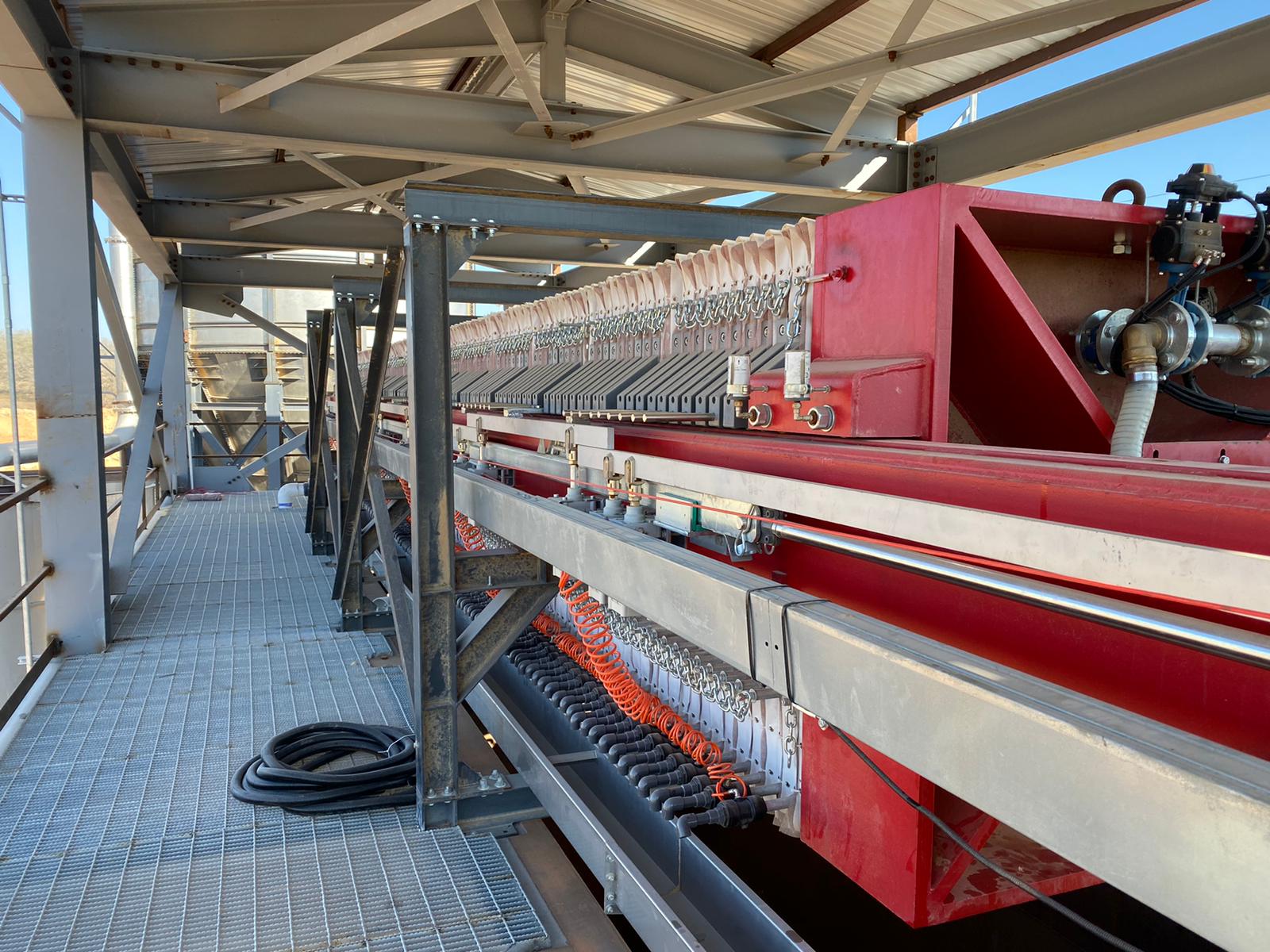
A filter press is one of the oldest and most reliable types of dewatering equipment, widely used in wastewater treatment across various industries. Its primary function is to separate solids from liquids, removing impurities and suspended particles from industrial wastewater. This process allows for easier waste handling and enables clean water to be returned to the system.
Filter presses operate by using pressure filtration across a filter media. Slurry is pumped into the press and dewatered under pressure, separating the liquid (filtrate) from the solids (cake).
What Are the Main Components of a Filter Press?
Component
Role
Frame
Supports the entire system.
Filter plates
Provide the structure for holding the filter cloth and forming the dewatering chambers.
Manifold
Includes piping and valves for slurry distribution and filtrate removal.
Filter cloth
Essential for optimizing performance and capturing solids.
Main components of a filter press
The design and size of a filter press depend on the volume and type of slurry being treated. ChemREADY offers a wide range of press types and capacities tailored to specific application needs.
Year-end budget planning
Is a filter press the right solution for your slurry?
Filter press performance depends on slurry characteristics, solids content, and production goals. Budgets for next year are being set now: put your own numbers into the filter press cost calculator and see what a press would cost and save before you commit.
The filter press originated in the mid-19th century in the United Kingdom and was initially used to extract vegetable oil. Significant technological developments in the mid-20th century led to the automatic horizontal-type filter press. Today’s modern designs offer significantly lower energy and maintenance costs than belt presses or centrifuges, with operational costs as low as one-sixth of those alternatives.
1/6
Operating cost
Modern filter presses can run at as little as one-sixth the operational cost of belt presses or centrifuges.
How Does a Filter Press Work?
1Slurry is pumped into the press and distributed evenly.
2Solids accumulate on the filter cloth, forming a “cake” within the plate chambers.
3Clean water exits through the filter plates via designated ports.
4Once the chambers are full, the filtration cycle ends, and the cake is released.
High-capacity presses often feature automatic plate shifters to speed up the process. Matec designs presses for fully automated, 24-hour operation, even in harsh environments like mines and chemical plants.
Dewatering equipment solutions
Before you spec a filter press
Slurry characteristics, solids loading, cycle time targets, and cloth selection all determine whether a filter press will perform for your application.
What Are the Applications and Advantages of a Filter Press?
Filter presses are especially valued because the dewatered solids (filter cake) are easier and cheaper to handle than untreated slurry. Clean water recovered from the process can be discharged to local municipalities or reused in a closed-loop system.
Compared to settling ponds, which require large space and ongoing maintenance, filter presses are a more efficient long-term solution. Settling ponds accumulate solids over time and lose effectiveness, requiring dredging or replacement.
Industries that benefit from filter presses include:
Food and beverageChemicalsMining and aggregatesPower generationAsphalt and cementSteel productionMunicipal water treatment
How Can a Filter Press Be Customized?
Filter presses can be tailored to individual needs with options such as:
✓Varying plate sizes and chamber numbers
✓Cloth washing systems
✓Drip trays and cake shields
High-pressure systems (21–30 bar) like those from Matec improve performance for even the most difficult slurries.
When Should You Use a Clarifier With a Filter Press?
Filter presses work best with slurries containing 50–60% solids. For lower solids content (5–10%), a clarifier should be used first. Clarifiers help concentrate solids via gravity and polymer flocculation before they reach the press.
Clarifier type
How it works
Vertical Deep Cone
Uses natural sedimentation.
Horizontal Rake Style
Uses mechanical rakes to stir and settle solids.
Types of clarifiers used ahead of a filter press
Up to 95% water recovery
When used together, clarifiers and filter presses can recover up to 95% of process water.
What Does Total Water Treatment From ChemREADY Include?
ChemREADY provides comprehensive support for water treatment systems. Our team evaluates water chemistry to determine optimal chemical treatments (flocculants, coagulants, pH balancers) that work in tandem with mechanical systems like clarifiers and filter presses.
Matec presses offer unique benefits:
✓Fully automated operation
✓Real automatic cloth washing
✓Remote monitoring and support
✓High-pressure filtration (up to 30 bar)
✓Easy identification of faulty cloths
✓Efficient cake release with gasser shakers
Whether you’re a small business or a large industrial operation, ChemREADY can help you implement a complete and cost-effective dewatering solution. Read our useful Water Facts blog Can my Small Operation Afford a Filter Press? to learn more.
Free on-site filter press analysis
Ready to implement a complete dewatering solution?
Whether you’re upgrading an existing system or planning a new installation, ChemREADY provides filter presses, clarifiers, and chemical programs designed to work together for reliable, long-term performance. Start with a free on-site analysis of your slurry and process.
A filter press is one of the oldest and most reliable types of dewatering equipment, widely used in wastewater treatment across various industries. Its primary function is to separate solids from liquids, removing impurities and suspended particles from industrial wastewater.
How does a filter press work?+
Slurry is pumped into the press and distributed evenly. Solids accumulate on the filter cloth, forming a “cake” within the plate chambers. Clean water exits through the filter plates via designated ports. Once the chambers are full, the filtration cycle ends, and the cake is released.
What are the main components of a filter press?+
The main components of a filter press are the frame, which supports the entire system; the filter plates, which hold the filter cloth and form the dewatering chambers; the manifold, which includes piping and valves for slurry distribution and filtrate removal; and the filter cloth, which captures solids.
When should a clarifier be used before a filter press?+
Filter presses work best with slurries containing 50–60% solids. For lower solids content (5–10%), a clarifier should be used first. Clarifiers help concentrate solids via gravity and polymer flocculation before they reach the press. When used together, clarifiers and filter presses can recover up to 95% of process water.
How does a filter press compare to a belt press, centrifuge, or settling pond?+
Today’s modern filter press designs offer significantly lower energy and maintenance costs than belt presses or centrifuges, with operational costs as low as one-sixth of those alternatives. Settling ponds require large space and ongoing maintenance, accumulate solids over time, and lose effectiveness, requiring dredging or replacement.
What industries use filter presses?+
Industries that benefit from filter presses include food and beverage, chemicals, mining and aggregates, power generation, asphalt and cement, steel production, and municipal water treatment.
Year-end budget planning
Bring a number to your 2027 budget meeting.
Estimate what cake solids, cycle time, and polymer dose are costing you now, and what getting back to baseline would save.
Technically reviewed by the ChemREADY dewatering team. Last reviewed July 2026.
Free on-site analysisIs a filter press right for your slurry?A ChemREADY specialist will test your feed and filtrate and tell you which press configuration fits your application. No obligation.