ChemREADY

Reading Time | 10 Minutes
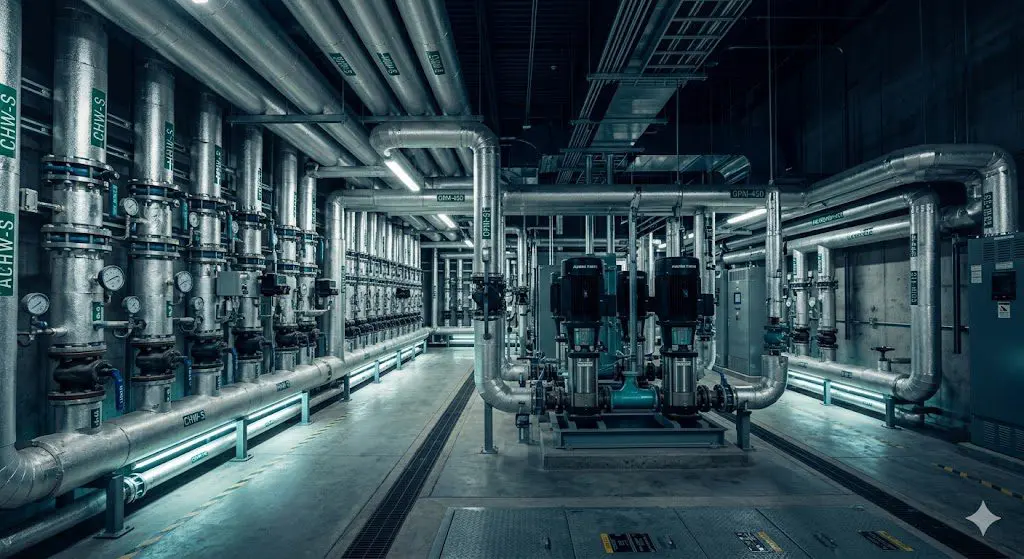
Nineteen people. That’s how many Legionella infections investigators linked to Kaiser Permanente’s Santa Clara Medical Center as of mid-May 2026. The investigation is ongoing. The source hasn’t been confirmed publicly. But a major healthcare system managing a Legionella cluster at the start of peak season is a direct signal to every facility professional managing a building water system: your water management plan needs to be working, not just existing.
The question worth asking right now: would your facility hold up to the same scrutiny?
If you're not confident your water management plan documentation is current, now is the time to find out — before a health alert forces the question. Call ChemREADY at 800-229-6801 or schedule a WMP gap review online.
Let's Check Your System Now →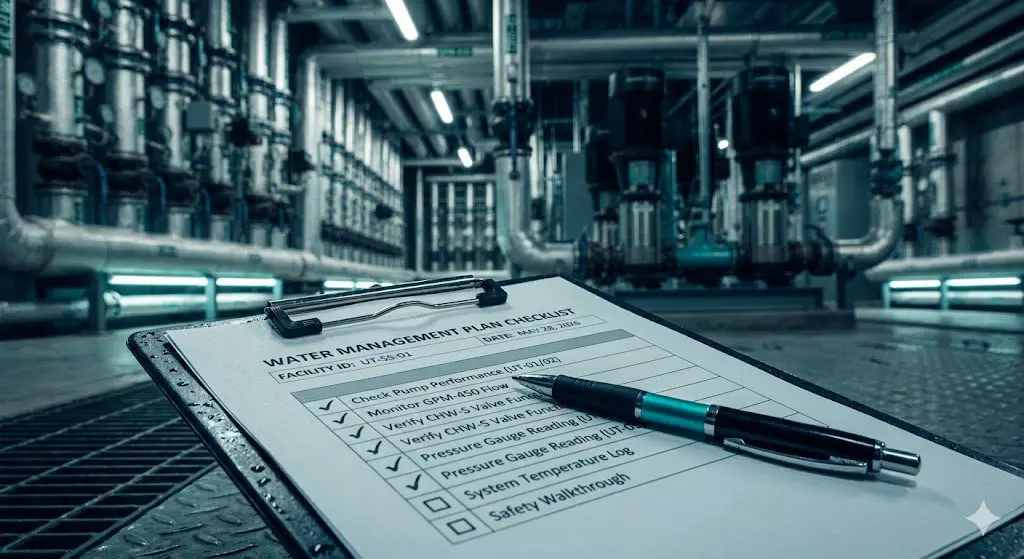
An ASHRAE 188 Water Management Plan (WMP) is a documented program that identifies Legionella hazards across a building’s water systems, establishes control measures, sets sampling protocols, and defines corrective actions when results exceed control limits. It is required for all covered buildings under ASHRAE 188 — and for healthcare facilities, it is a condition of Joint Commission accreditation.
The standard defines “covered buildings” broadly: healthcare facilities, long-term care facilities, hotels, large office buildings, and any multifamily residential or mixed-use facility meeting certain size thresholds. If your facility has a cooling tower, a decorative water feature, or a complex domestic hot/cold water distribution system, you are likely covered.
Most accredited healthcare facilities have a WMP. What varies enormously is whether that plan is actively followed — and whether anyone can prove it.
Yes — and the requirement is not just regulatory. The Joint Commission’s Environment of Care standards require accredited hospitals to implement a water management program that addresses Legionella risk across all water systems. The CDC’s Healthcare Infection Control Practices Advisory Committee (HICPAC) also recommends WMPs aligned with ASHRAE 188 for all healthcare settings serving immunocompromised patients.
Beyond Joint Commission, CMS (Centers for Medicare & Medicaid Services) issued a 2017 memorandum requiring all healthcare facilities that participate in Medicare or Medicaid to have a water management policy and program in place. That requirement has not been rescinded. Failure to maintain an active, documented program can trigger CMS citations that put reimbursement at risk — an exposure most hospital administrators don’t fully appreciate until an investigation starts.
For healthcare facilities with sterile processing or dialysis operations, ANSI/AAMI ST108 adds another compliance layer on top of ASHRAE 188 requirements, governing critical water system quality for reprocessing medical devices.
Legionella pneumophila amplifies in warm, stagnant water. In building water systems, the highest-risk outlets and zones are:
| Outlet / Zone | Risk Level | Recommended Sampling Frequency |
|---|---|---|
| Cooling tower basin / drift | Very High | Monthly (or per WMP control limits) |
| Hot water heater (≤140°F) | High | Quarterly |
| Distal hot water taps | High | Quarterly |
| Showerheads / aerators | High | Quarterly or after low-use periods |
| Ice machines | Moderate | Semi-annually |
| Decorative water features | High | Monthly during operation |
| Low-use / dead-end lines | Very High | Before returning to service |
The highest-risk period for Legionella amplification is late spring through summer — exactly where we are now. Water temperatures in recirculating systems climb. Low-use areas see reduced flushing. Cooling systems come under peak demand. Each of these conditions independently raises risk; together, they create the conditions for an outbreak.
A free on-site water analysis is the fastest way to find out. We'll walk your system, review your control points, and tell you plainly where the gaps are — no obligation, no guesswork.
Get My Free Water Analysis →A defensible Legionella program has five components, all of which need to be documented and actively maintained:
What we find when we walk a healthcare facility’s water system that hasn’t had professional attention is a predictable combination: deferred sampling schedules, control limits that haven’t been revisited since the plan was first written, and distal outlets that haven’t been flushed or tested in months.
A WMP that fails to document any one of these components isn’t just incomplete — it’s a liability document. During an outbreak investigation, regulators and insurers don’t just want to see the binder. They want logs, test results, corrective action records, and evidence the plan was updated when system changes were made.

A positive environmental culture doesn’t automatically mean an outbreak is imminent — but it does trigger a mandatory response process that must be documented. Per CDC guidance and most state health department protocols:
Facilities that have an active, managed program in place before a positive culture handle remediation faster, at lower cost, and with significantly less regulatory exposure than facilities that are rebuilding a response process from scratch under pressure.
Biocide selection matters in remediation, too — not all disinfectants perform equally at every point in a distribution system. The right Legionella treatment approach depends on your system’s configuration, flow patterns, water chemistry, and the specific zone where cultures were found.
June through August is when Legionella risk in building water systems is highest. If your WMP documentation, sampling records, and corrective action logs wouldn’t hold up to a review today, this is the moment to address it — not after a health alert.
ChemREADY offers a free on-site water analysis — we'll walk your system, test your water, and give you a plain-English report on what we find. No obligation. Just answers.
Talk to a Water Safety Expert →Book a 30-minute conversation directly. We'll discuss your dewatering and solids management situation and whether working together makes sense.
Book a 30-minute call →Take a look at our dewatering services first. See where you stand across polymer programs, filter press performance, and solids handling infrastructure — then decide if a conversation makes sense.
Find out what a buyer would see →Browse everything we do in dewatering — chemicals, equipment, and services — at your own pace, no conversation required.
Explore our dewatering solutions →We work with advisors who encounter infrastructure gaps in solids management and dewatering client businesses. If you're looking for a referral partner for pre-sale readiness work, let's talk.
Learn about our partner program →