Reading Time | 10 Minutes

Your press is still producing cake. Your operators have adjusted the schedule to account for the longer runs. Everything looks fine — until you see what deferred cycle time problems actually cost in throughput, cloth replacement, and disposal fees.
Filter press cycle times don’t drift without a reason. Ignoring what’s driving the change usually means paying for it later, in ways that don’t show up on a single shift report.
A filter press cycle runs from when the press closes and begins pumping feed slurry to when the plates separate and cake drops. Cycle time is a direct function of how quickly filtrate drains through the filter cloth and cake.
When cycles start extending — five minutes longer, then ten, then twenty — throughput per shift drops, energy consumption climbs, and cloth and plate wear accelerates. What the number is telling you depends on what else is changing.
Most facilities don't know their press has drifted from peak performance until cycle times have been creeping for months. A free on-site water analysis tells you exactly where you stand — before it becomes a disposal cost problem.
Talk to a Dewatering Specialist →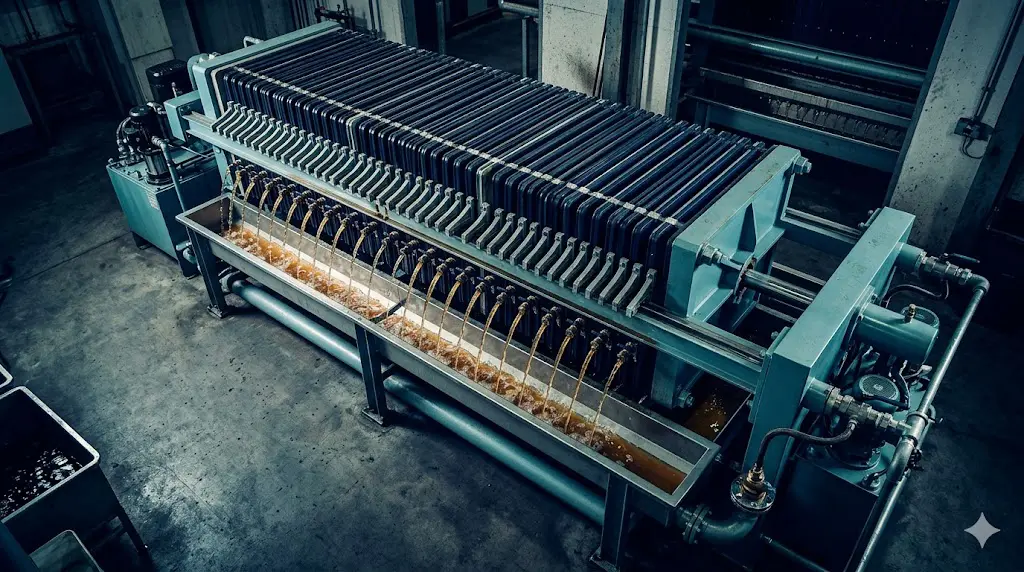
Filter press cycle times increase due to three main causes: cloth blinding (buildup of particles in the filter weave), flocculant program drift (polymer dose or type no longer matched to feed characteristics), and feed stream changes (higher TSS or different particle size). Each produces a different symptom pattern and requires a different corrective action.
Cloth blinding is the most common culprit. Filter cloths develop a gradual buildup of fine particles, chemical scale, or biological matter in the weave that restricts flow. Telltale sign: cycle times are getting longer, but cake moisture content is staying roughly the same. The filtrate is fighting its way through cloth that’s progressively more restricted.
Flocculant program drift looks different. A flocculant — the polymer added to bind fine particles into filterable floc — has to be matched to your specific feed characteristics. If the flocculant dose or type hasn’t kept pace with changes in your feed, floc formation weakens. Weak floc drains slowly and produces wetter cake. Longer cycle and higher moisture together typically point here.
Feed stream changes are often overlooked. A shift in production chemistry, a new raw material, or seasonal variation in water quality can alter TSS concentration or particle size coming into the filter press. A flocculant dose calibrated for 8,000 mg/L TSS won’t perform the same at 12,000 mg/L.
Most facilities adjust the schedule rather than investigate why performance changed — which is why the problem compounds. In facilities we work with, cycle time drift is one of the most reliable early indicators of a flocculant program that needs recalibration, and one of the most commonly deferred issues until it becomes a throughput or disposal cost problem.
That combination almost always points to flocculant drift — a polymer program that hasn't kept pace with your feed. It's one of the most fixable problems in dewatering, and ChemREADY can review your program at no cost.
Request a Free Polymer Program Review →Don’t start by extending cycle time or increasing polymer dose. Start by characterising what’s happening:
Separating a cloth problem from a chemistry problem before you invest saves time and budget.
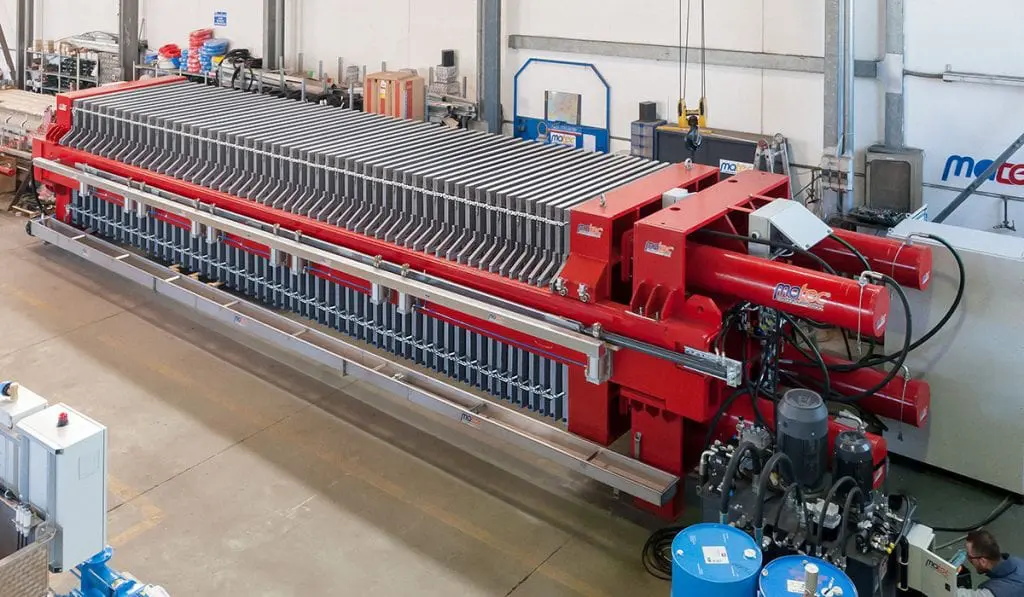
A press running at 80% of design throughput through peak production months is a quiet drag on operational capacity. Sludge volumes that exceed dewatering capacity end up hauled off-site — exactly the outcome a properly functioning dewatering program is supposed to prevent.
If your cycle times have been trending in the wrong direction, a free on-site water analysis is a straightforward starting point. We’ll look at your feed chemistry, polymer program, and system performance — and give you a plain-English report on what’s driving the change.
ChemREADY will come on-site, pull samples, and walk you through exactly what the data is showing — cloth condition, flocculant performance, feed TSS. No cost, no obligation, plain-English findings.
Schedule a Free On-Site Diagnostic →Book a 30-minute conversation directly. We'll discuss your dewatering and solids management situation and whether working together makes sense.
Book a 30-minute call →Take a look at our dewatering services first. See where you stand across polymer programs, filter press performance, and solids handling infrastructure — then decide if a conversation makes sense.
Find out what a buyer would see →Browse everything we do in dewatering — chemicals, equipment, and services — at your own pace, no conversation required.
Explore our dewatering solutions →We work with advisors who encounter infrastructure gaps in solids management and dewatering client businesses. If you're looking for a referral partner for pre-sale readiness work, let's talk.
Learn about our partner program →