Reading Time | 7 Minutes
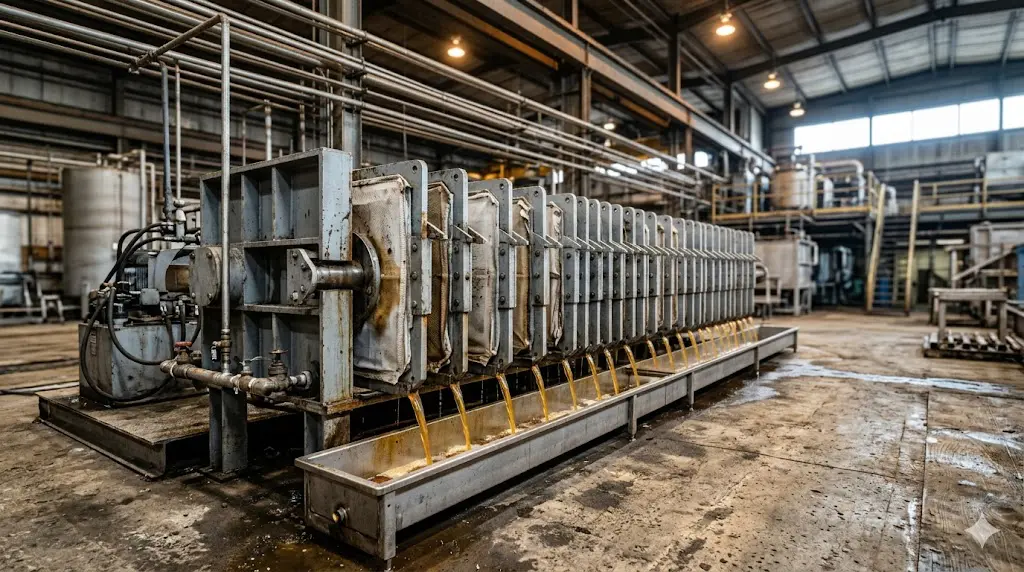
Your filter press is running. Cycle times look normal. The operator isn’t raising flags.
What you may not know is whether what’s leaving your facility as non-hazardous waste still qualifies as non-hazardous — and whether it did last quarter.
Filter press performance has a direct line to regulatory waste classification. When a press isn’t dewatering effectively, the moisture content and concentration of metals and other regulated constituents in the press cake can cross thresholds that change how that material must be handled, manifested, and disposed of. Hazardous waste disposal typically runs three to five times the cost of non-hazardous disposal. That’s before accounting for RCRA liability for past disposal if reclassification occurs during an inspection.
Filter press cake is classified under RCRA — the Resource Conservation and Recovery Act — based on its composition. Press cake from industrial wastewater treatment is non-hazardous if the leachable concentrations of regulated metals and compounds fall below the thresholds set by the Toxicity Characteristic Leaching Procedure (TCLP) test.
The TCLP test is a standardized EPA method that simulates the leaching of contaminants from solid waste in a landfill environment. If leachate concentrations of regulated metals — including lead (5.0 mg/L threshold), chromium (5.0 mg/L), arsenic (5.0 mg/L), cadmium (1.0 mg/L), or mercury (0.2 mg/L) — exceed the regulatory limits, the waste is characterized as hazardous under the Toxicity Characteristic (RCRA Code D).
When a filter press underperforms, the cake retains more moisture and higher concentrations of the solids it’s supposed to capture. That concentration effect is what pushes TCLP results over the threshold.
The path from non-hazardous to hazardous runs through press performance. Worn filter cloths allow solids to pass into the filtrate and reduce cake density. Inadequate feed pressure leaves cake under-consolidated. Shortened cycle times — a common response to throughput pressure — send wetter cake to the disposal container. Inconsistent coagulant dosing upstream means variable solids loading into the press.
None of those performance issues necessarily shows up in scheduled TCLP results. Especially if sampling doesn’t capture high-production days when metals loading is highest.
Most facilities don't know their press has drifted from peak performance until cycle times have been creeping for months. A free on-site water analysis tells you exactly where you stand — before it becomes a disposal cost problem.
Talk to a Dewatering Specialist →
Reclassification changes far more than a label. The table below compares what each classification requires:
| Requirement | Non-Hazardous Waste | Hazardous Waste (RCRA) |
|---|---|---|
| TCLP threshold | Below regulatory limits | Exceeds one or more RCRA D-code limits |
| Disposal cost (est.) | $50–150/ton | $200–500+/ton — 3–5x higher |
| Transporter | Certified solid waste hauler | Licensed hazardous waste transporter required |
| Manifest | Bill of lading / standard manifest | RCRA hazardous waste manifest + EPA ID |
| Recordkeeping | Standard disposal records | 3-year manifest retention, biennial reporting |
| Past disposal liability | Minimal if records are maintained | RCRA liability extends to past disposal if reclassified |
The Toxicity Characteristic Leaching Procedure (TCLP) is an EPA method (SW-846 Method 1311) that simulates the leaching of contaminants from solid waste in a municipal landfill. A sample of the waste is extracted with an acidic solution at a controlled pH, and the resulting leachate is analyzed for 40 regulated compounds — 8 metals and 32 organic compounds.
The key limitation for compliance purposes: TCLP testing is a snapshot. It measures what’s in the sample collected at a specific time under specific production conditions. A facility that collects TCLP samples on its best operating days — or averages results across samples taken at different production loads — may be producing results that don’t represent its worst-case waste stream. That worst case is what an unannounced inspection grab sample catches.
That combination almost always points to flocculant drift — a polymer program that hasn't kept pace with your feed. It's one of the most fixable problems in dewatering, and ChemREADY can review your program at no cost.
Request a Free Polymer Program Review →Most EHS compliance programs manage waste classification at the point of characterization testing, not at the point of generation. TCLP testing is done on schedule, results are filed, and as long as the numbers come back within limits, the press isn’t questioned.
The problem is that filter press performance drifts in ways that aren’t visible in TCLP results until the drift becomes a violation. Filter cloths blind progressively. Coagulant dosing programs lose calibration as feed chemistry changes with production mix. Feed pump output shifts with wear and seasonal load variation.
A dewatering program with no performance monitoring between TCLP tests is a compliance schedule, not a compliance program. The difference is what happens when performance drifts — and whether anyone catches it before the next manifest goes out.
What we find in facilities where press performance has become a compliance issue is consistent: a dewatering setup built for one set of production conditions, running in a production environment that has since changed, with no systematic review connecting performance metrics to waste characterization data.
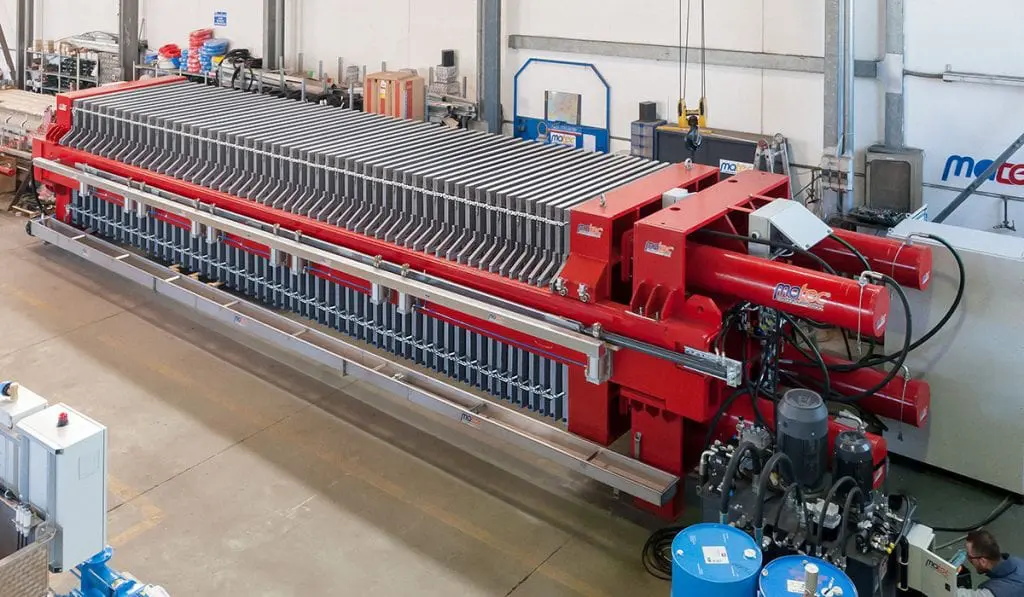
The leading indicators for press performance drift are on the process side, not the lab side. Cake moisture content and press weight are the most direct metrics — if moisture is climbing week over week, the cake is under-consolidated and solids concentrations are rising. Cycle time, filtrate turbidity, and cloth differential pressure round out the standard monitoring set.
A managed dewatering program connects operational performance metrics to waste characterization outcomes. When any of those performance parameters drift, the program flags it — before the next TCLP test, not after. Whether the cause is cloth replacement, coagulant adjustment, or upstream process chemistry, it gets addressed while the fix is still ahead of the compliance event.
For EHS directors managing disposal programs, performance records also matter independently of TCLP results. If a compliance question arises about past disposal, records demonstrating active performance monitoring are a materially different position than TCLP results alone — particularly for facilities that have sent large volumes of press cake to disposal over a multi-year period.
ChemREADY will come on-site, pull samples, and walk you through exactly what the data is showing — cloth condition, flocculant performance, feed TSS. No cost, no obligation, plain-English findings.
Schedule a Free On-Site Diagnostic →Book a 30-minute conversation directly. We'll discuss your dewatering and solids management situation and whether working together makes sense.
Book a 30-minute call →Take a look at our dewatering services first. See where you stand across polymer programs, filter press performance, and solids handling infrastructure — then decide if a conversation makes sense.
Find out what a buyer would see →Browse everything we do in dewatering — chemicals, equipment, and services — at your own pace, no conversation required.
Explore our dewatering solutions →We work with advisors who encounter infrastructure gaps in solids management and dewatering client businesses. If you're looking for a referral partner for pre-sale readiness work, let's talk.
Learn about our partner program →