Reading Time | 5 Minutes
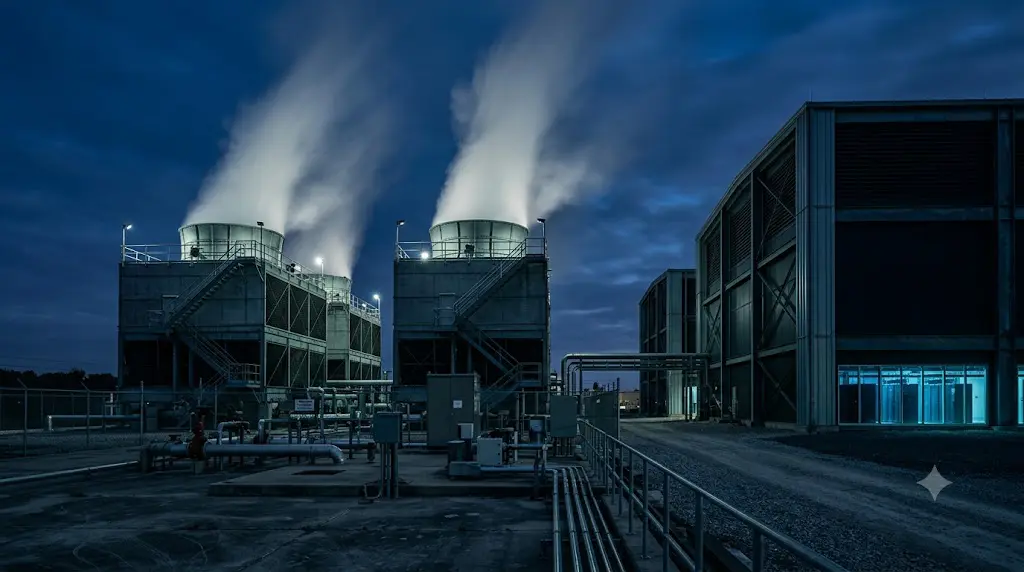
A facility manager we work with in Pennsylvania called us last summer. His makeup water consumption had jumped about 30% compared to the previous year. Same system. Same building. Same summer. His water bill was telling him something was wrong, but nobody had any answers.
His first guess was a leak. It wasn’t a leak.
Cooling towers work by evaporating water to remove heat. As water evaporates, the dissolved minerals left behind (calcium, magnesium, silica, chlorides) concentrate in the basin. Cycles of concentration (COC) is the ratio of those minerals in the tower water versus your makeup water. It tells you how many times the water has been “used” before it’s discharged through blowdown, the controlled removal of concentrated water to prevent scale and corrosion.
When COC runs too low, you’re blowing down too frequently. You’re dumping treated tower water before the system actually needs it and replacing it with fresh makeup. That’s what was happening in Pennsylvania. The blowdown controller had been set by a previous vendor to cycle at an overly conservative threshold. Nobody changed it. For three years, the tower was bleeding water.
When we walked the system and pulled the numbers, the fix was straightforward: recalibrate the controller to target an appropriate COC for their water chemistry, confirm the inhibitor program could handle the higher concentration, and monitor for scale. One site visit. The savings showed up on the next water bill.
Most facilities find out their cycles of concentration are off when the water bill arrives. Digital remote monitoring tracks conductivity, blowdown, and chemical feed in real time, so drift gets caught in days instead of years.
See How Remote Monitoring Works →Push COC past what your chemical program can support and you get scale: calcium carbonate deposits fouling the fill media, cutting heat transfer efficiency, and eventually damaging the tower structure. Elevated TDS (total dissolved solids) can also affect biocide performance over time, which introduces biological risk on top of the mechanical damage.
The right COC isn’t a universal number. It depends on your makeup water quality, your inhibitor chemistry, and how the system was designed. In most cases, there’s real room to optimize. And in most facilities we visit, nobody has ever actually run the calculation.
That Pennsylvania facility had a chemical supplier coming by monthly. They dropped off product and spot-checked a few readings. Nobody was pulling a full water quality report, calculating the actual COC, or checking what the blowdown controller was set to.
That’s not a water treatment program. That’s a delivery route.
The difference matters. A managed program catches this kind of thing before it shows up on a water bill. Digital remote monitoring can flag it in real time. Even without that, a proper quarterly site review would have caught this in the first year.
If your cooling tower water treatment program isn’t producing regular water quality reports and someone isn’t checking your COC against your chemistry, you’re probably leaving money on the table, or paying it in water bills you don’t need to pay.
A water analysis characterizes your filtrate against your permit limits — TSS, metals, COD, pH — and shows you where you stand before your next sampling event does. ChemREADY benchmarks the results and flags what to correct.
Request Your Free Water Analysis →Want continuous coverage between samples? See how digital remote monitoring closes the 4–6 week gap →
Book a 30-minute conversation. We'll walk through your makeup water numbers, blowdown controller settings, and inhibitor chemistry — and tell you straight whether your COC is where it should be.
Book a 30-minute call →Start with data instead of a conversation. A free on-site water analysis characterizes your makeup and tower water — hardness, alkalinity, silica, conductivity, TDS — so you can see what COC your chemistry can actually support before you touch the controller.
Request your free water analysis →See what goes into a managed cooling tower program — scale and corrosion inhibitor chemistry, biological control, blowdown controller calibration, and documented water quality reporting — before you talk to anyone.
Explore our cooling tower water treatment →We work with facility and energy teams responsible for tower performance across several sites. Digital remote monitoring tracks conductivity, blowdown events, and chemical feed continuously with out-of-range alerts at every location — so a drifting controller surfaces in days, not on next year's water bill.
See how digital remote monitoring works →