ChemREADY

Reading Time | 10 Minutes
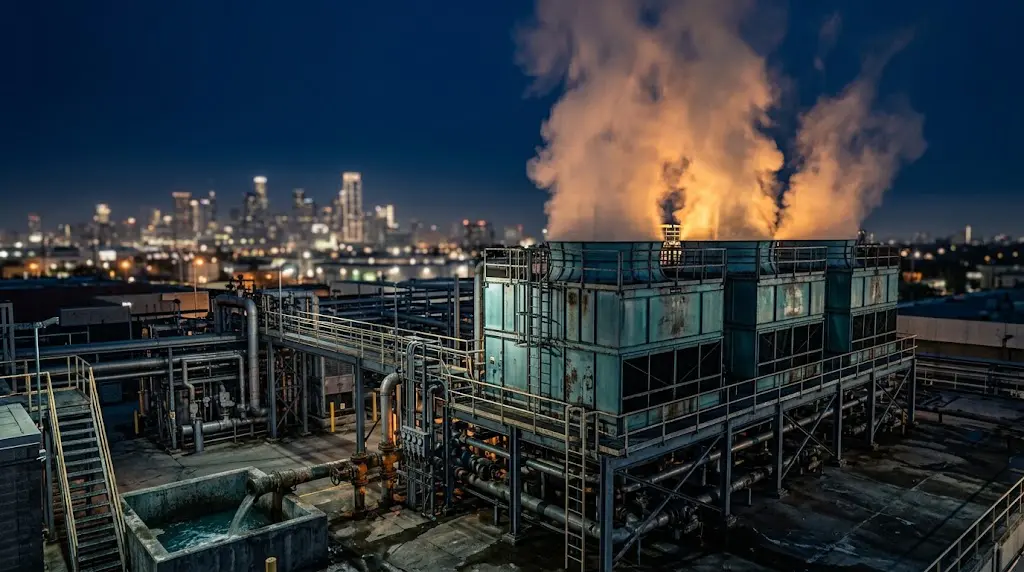
Ninety-two people infected. Seven dead. Cooling towers on New York City’s Upper East Side confirmed as the source. In early August 2026 — reported as August 5 — Governor Hochul signed legislation strengthening inspection, testing, and documentation requirements for New York City cooling tower operators, the latest tightening of what was already the nation’s most demanding cooling tower Legionella compliance framework.
If you run cooling towers anywhere in the United States, this is worth your full attention — not just as a news story, but as a preview of where compliance requirements are heading. You can read the state’s announcement on the Governor’s official release.
New York’s August 2026 law requires New York City cooling tower owners to certify twice a year — in January and July — that their towers have been inspected, tested, cleaned, and disinfected in compliance with the NYC Administrative Code. It requires correcting maintenance deficiencies within 48 hours, notifying the Department of Buildings within 24 hours when microbe levels present a serious health threat, and it raises civil penalties for noncompliance.
It builds on a change that took effect a few months earlier. Under NYC Local Law 159 (effective May 2026), Legionella culture sampling — previously required every 90 days — must now be performed at least every 31 days while the tower is operating, by a New York State ELAP-certified laboratory. Together, these moves strengthen one of the country’s most rigorous cooling tower frameworks.
| Requirement | What NY Now Requires |
|---|---|
| Legionella testing frequency | Every 31 days (monthly) while operating — up from every 90 days (NYC Local Law 159, eff. May 2026). |
| Certification | Twice-yearly certification (January & July) to NYC DOB that towers were inspected, tested, cleaned, and disinfected. |
| Remediation timeline | Maintenance deficiencies corrected as soon as possible, no later than 48 hours. |
| Serious health threat | Notify DOB and take corrective action within 24 hours. |
| Laboratory requirement | All Legionella testing performed by a NYS ELAP-certified laboratory using culture methods. |
| Civil penalties | $2,500 first violation; $7,000 subsequent; up to $12,500 if a violation results in serious injury or death. |
New York has done this before. After a 2015 outbreak in the South Bronx killed 12 people, New York became the first state to mandate cooling tower registration and routine Legionella testing — first-in-nation legislation at the time. Other states followed within a few regulatory cycles, and the pattern is repeating: California’s SB 1144, the Safe and Efficient Water Act, now requires Legionella management plans for certain public-agency and school buildings with cooling tower systems, and other jurisdictions have adopted registration or testing rules of their own.
For operators in New York, these are compliance deadlines. For everyone else, they’re a signal of where the floor is moving. The facilities that treat New York as a preview — not someone else’s problem — are the ones that won’t be scrambling when their own state acts.
Schedule a free water analysis. We'll assess your cooling tower water and your current management plan, and tell you exactly where your Legionella compliance stands.
Schedule your free water analysis →ASHRAE Standard 188 is the American standard that establishes minimum requirements for managing Legionella risk in building water systems, including cooling towers. It requires a written Water Management Plan built on a hazard analysis — defined control measures and action levels, documented monitoring, and corrective action procedures. In other words, an actively maintained program, not just a written policy.
Importantly, ASHRAE 188 doesn’t set a single universal testing interval — the Water Management Plan and applicable regulations do. In New York, that means culture sampling within 14 days of seasonal startup and then at intervals not exceeding 90 days under state rules (10 NYCRR Part 4), tightened to every 31 days in New York City. What ASHRAE 188 does require is documented sampling results, demonstrated corrective action when results exceed action levels, and a program that stays calibrated to current system conditions.
A compliant water management plan is more than a binder. At minimum, it should contain:
A lot of facilities have a water management plan on file. Fewer have one that’s actively working.
What we see in facilities we’re called into is a consistent pattern: a binder written when the system was commissioned, not updated since a renovation changed the configuration, and not tested against recently enough to know whether it’s still working. That document doesn’t protect anyone. It creates a false sense of coverage.
The difference between a managed Legionella program and a chemical drop-off arrangement is what happens between treatments. A managed program generates a testing record. It adjusts biocide dosing when results trend in the wrong direction, and pairs testing with digital remote monitoring so nothing drifts unseen between visits. It produces the documented, time-stamped evidence that matters when a regulator or an attorney starts asking questions.
| Managed Program | Chemical Drop-Off | |
|---|---|---|
| Testing record | Time-stamped Legionella and bacteriological results on a defined schedule. | Chemicals delivered; little or no independent testing trail. |
| Documentation | Maintained, current, tied to system conditions. | Sparse; often a plan written once and never updated. |
| Corrective action | Triggered by action levels; adjustments logged. | Reactive at best; frequently absent. |
| Regulatory defensibility | Evidence you were running the program, not just holding it. | Weak under inspection or litigation. |
| ASHRAE 188 alignment | Meets the standard’s living-program intent. | A treatment step, not a water management plan. |
The water management plans that hold up under scrutiny are living documents — tested against regularly, updated when system conditions change, and tied to a treatment program that responds when results demand it.
Two questions worth answering today: When was the last time someone tested your cooling tower water for Legionella? When was your water management plan last reviewed against your current system configuration? If either answer is “I’d have to check,” that’s the gap.
The facilities in the best position after an outbreak or a compliance inspection are the ones with a documented record of active management — not just that they had a program, but that they were running it. New York’s legislation moved fast because the political pressure was enormous. The next state to act won’t give facility managers much runway.
Request your wastewater sample test. We'll run a PFAS scan by EPA Method 1633 and give you a discharge profile with dates, methods, and results you can put on the table.
Request your wastewater sample test →A free water analysis tells you where your testing, treatment, and water management plan actually stand — before an inspection or an outbreak does.
Schedule your free water analysis →Or call us directly: 800-229-6801
ASHRAE 188-aligned plans that stay living documents — sampling schedule, action levels, and a corrective-action trail.
Explore water management plans →Treatment, testing, and monitoring built around your system — not a chemical drop-off.
See cooling tower services →Take the Water Confidence Assessment — five minutes to see how your Legionella compliance posture stacks up.
Take the assessment →