Reading Time | 10 Minutes
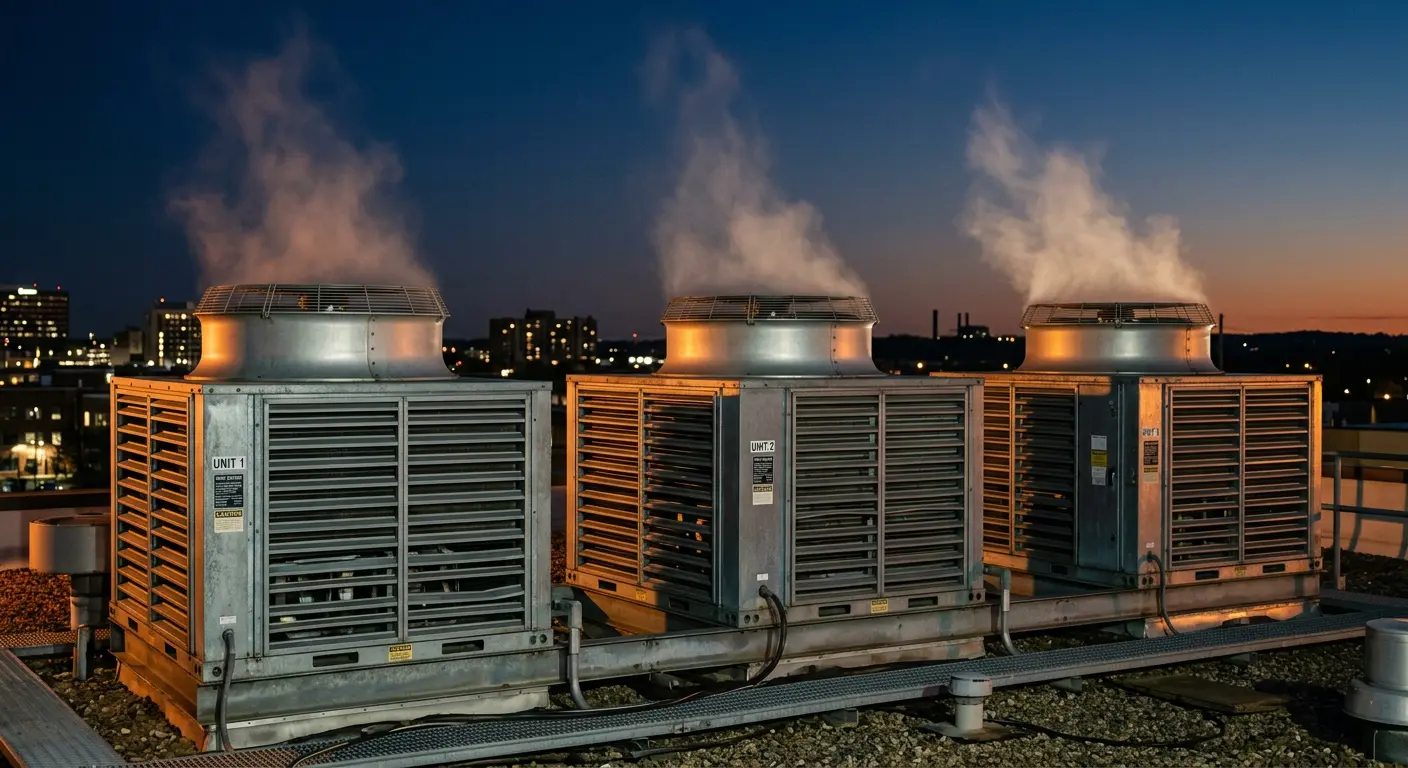
In September 2026, the New York City Health Department ordered 10 cooling towers in the South Bronx cleaned and disinfected during a Legionnaires’ disease cluster that, as of September 22, had sickened 22 people and killed two. Eight of those 10 towers were in compliance with the city’s testing requirement, a rule that had just been tightened in May to require sampling every 31 days.
Read that again: the towers were testing on schedule, and Legionella was growing anyway. That’s the gap at the center of cooling tower Legionella prevention. A test tells you what the water looked like on the day it was sampled. It doesn’t control what happens on the other 30.
Legionella prevention is the ongoing control of cooling tower conditions — disinfectant residual, scale and biofilm, cycles of concentration, and stagnant water — that keep the bacteria from growing to dangerous levels. Legionella testing is a periodic check of whether the bacteria were present when a sample was pulled. Prevention controls the conditions; testing verifies the result.
Most facilities have testing. Fewer have prevention. A positive result means Legionella has already grown to detectable levels, which means something in the system allowed it. The test found the problem after it developed. A managed Legionella treatment program is built to keep those conditions from developing, and that work doesn’t happen on a monthly schedule. It’s continuous.
| Factor | What Testing Tells You | What a Managed Program Controls |
|---|---|---|
| Legionella presence | Yes, at the moment of sampling | Keeps counts low by controlling growth conditions |
| Disinfectant residual | No | Continuous dosing, verified between visits |
| Scale, sediment, and biofilm | No | Scale inhibitors, biodispersants, and cleaning |
| Cycles of concentration | No | Conductivity-based blowdown control |
| Stagnant water (idle cells, dead legs) | No | Recirculation, flushing, and disinfection at startup |
| Conditions between samples | No, only the sample day | Continuous monitoring and trend data |
Testing answers one question: was Legionella present when we sampled? A managed program answers a different one: are conditions hostile to Legionella right now, and have they been since the last visit?
Cooling tower Legionella prevention depends on holding four conditions at the same time:
Biocide residual that isn’t checked between service visits can drift below effective levels within days. A cooling tower water treatment program that tracks conductivity, pH, and residual continuously carries a very different risk profile than one that relies on the monthly sample to catch problems.
ChemREADY builds and manages ASHRAE 188 water management plans with control limits, corrective actions, and documentation, so testing verifies a program instead of standing in for one.
Explore Water Management Plans →ASHRAE 188 is the consensus standard most healthcare, hospitality, and large commercial facilities use for Legionella risk management, and it’s clear about the order of operations. It requires a water management program: a team, a description of the water systems, a hazard analysis, control locations with defined control limits, corrective actions, monitoring, and documentation. Testing belongs inside that program as a way to confirm it’s working. It isn’t a substitute for it.
ASHRAE 188 also doesn’t set a sampling frequency. That’s left to the facility’s water management plan, based on its own hazard analysis. A facility with a rigorous test schedule and no documented control measures doesn’t meet the standard, no matter how many results come back negative.
New York’s rules reflect the same logic. Owners there must keep a written maintenance program and plan for each tower, not just a testing log. Even so, the Bronx cluster showed that a plan on paper and a test on schedule don’t guarantee that conditions are being controlled day to day. We covered what the Upper East Side outbreak revealed about that gap in Cooling Tower Legionella Program: NYC Outbreak Warning.
The interval between samples is where problems develop. Test monthly and you have roughly 30 days between data points. Warm water, stagnant zones, depleted residual, and deposits can let Legionella rebound within days once control slips, well inside that window.
A clean result on September 1 doesn’t mean the tower was clean on September 15. The samples tell you what the system looked like on one day. They don’t tell you what it looked like in between.
When we walk a system that just tested positive, the chemistry usually tells the same story: biocide residual that drifted below its effective range, deposits building in low-flow areas, and blowdown that wasn’t keeping conductivity in check. None of it appeared on the last test report. It developed in the interval. Testing still matters, and it’s how you know a program is working, but it can only report on conditions someone else has to control.
Ask three questions:
These three questions separate a program from a documentation exercise. And if a sample ever does come back positive, have a response plan ready before you need it.
The facilities that stay out of the news aren’t the ones testing most often. They’re the ones controlling conditions continuously:
A chemical delivery arrangement, where product is dropped off and testing is scheduled, doesn’t provide any of that. The difference between a managed program and a supply arrangement is what happens between deliveries and between samples. If your cooling tower program is built around test dates rather than treatment controls, it’s worth having someone walk the system before the next outbreak makes the news in your city.
ChemREADY offers a free on-site water analysis. We'll walk your system, test your water, and give you a plain-English report on what we find. No obligation. Or call 800-229-6801.
Schedule Your Free Water Analysis →Legionella prevention is the ongoing control of water system conditions — disinfectant residual, scale and biofilm, cycles of concentration, and stagnant water — that keep the bacteria from growing to dangerous levels. Testing is a periodic check of whether Legionella was present when a sample was collected. Prevention controls the conditions; testing verifies the result. Both belong in a water management program, but testing alone is not prevention.
Preventing Legionella in a cooling tower means holding four conditions at once: effective disinfectant residual from a biocide program, control of scale, sediment, and biofilm that shelter bacteria from biocide, blowdown control that keeps cycles of concentration in the treatment program’s design range, and elimination of stagnant water in idle cells and dead legs, since Legionella grows best between 77°F and 113°F.
Problems develop in the interval between samples. Once disinfectant residual drops or deposits build, Legionella can rebound within days, well inside a monthly testing window. In New York City’s September 2026 South Bronx cluster, 8 of the 10 cooling towers that tested positive were in compliance with the city’s 31-day testing requirement. Testing reveals growth after it happens; a managed treatment program controls the conditions that allow it.
ASHRAE 188 requires a water management program that includes a program team, a description of the water systems, a hazard analysis, control locations with defined control limits, corrective actions, monitoring, verification and validation, and documentation. Testing is a validation tool within that program, not a substitute for it, and the standard leaves sampling frequency to the facility’s plan.
It depends on jurisdiction. New York City requires Legionella testing at least every 31 days while a cooling tower is operating, under rules that took effect May 8, 2026, and New York State sets its own requirements outside the city. ASHRAE 188 does not set a frequency; the water management plan does, based on hazard analysis. More frequent testing without active treatment controls does not prevent Legionella growth.
Book a free on-site water analysis and a review of your cooling tower program, control limits, and documentation.
Book Your Free Analysis →Or call 800-229-6801
ASHRAE 188 water management plans with defined control points, action levels, and documentation an inspector can follow.
See Water Management Plans →Oxidizing and non-oxidizing biocide programs matched to your tower’s load, temperature, and water chemistry.
See Cooling Tower Biocides →Healthcare → Commercial Buildings → Manufacturing → Food & Beverage →
