Reading Time | 10 Minutes
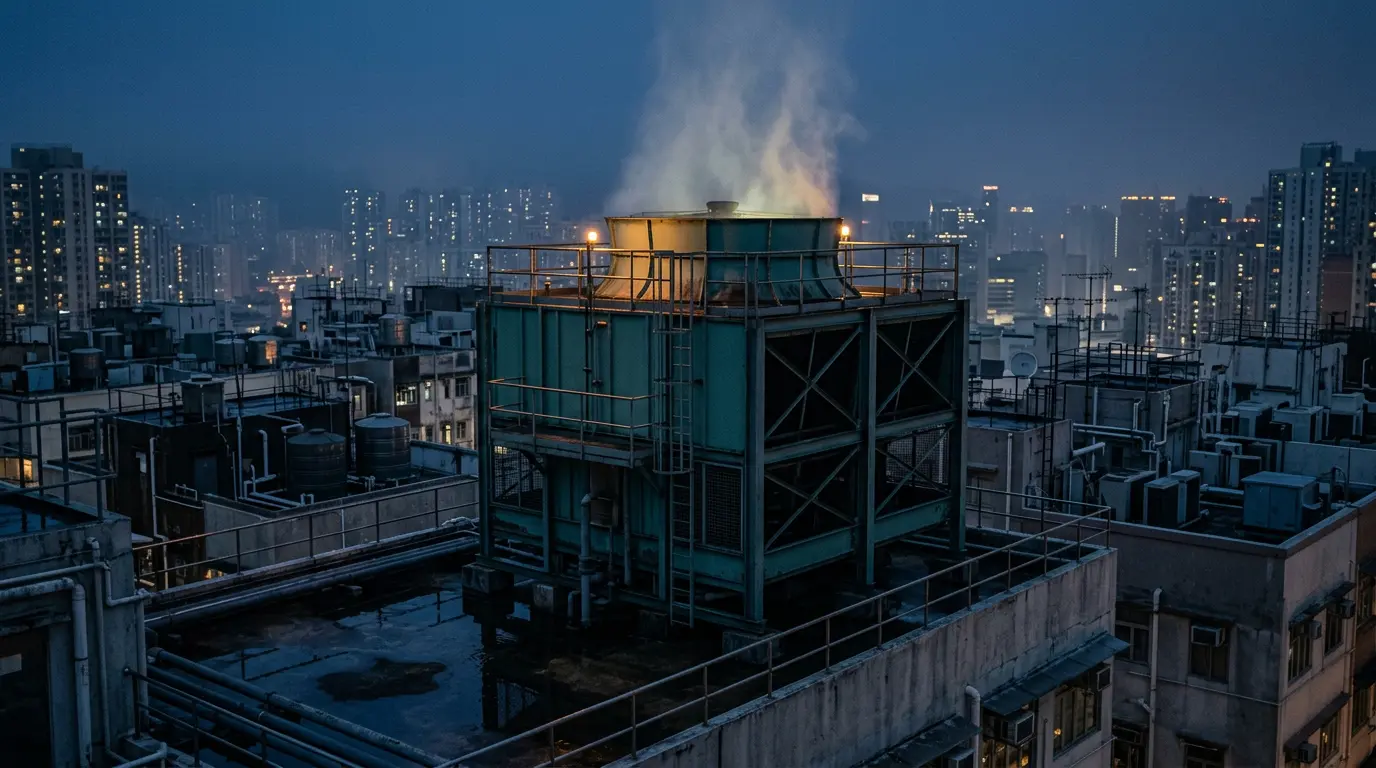
In September 2026, a Legionnaires’ disease cluster in the South Bronx reached 23 confirmed cases and two deaths, and culture testing found live Legionella in seven cooling towers in the affected area (NYC Health Department). Every one of those building owners now faces the same question from two directions. A plaintiff’s attorney and their own insurance carrier both want to know what the water management plan said, and whether anyone can prove it was followed.
That question is where Legionella liability insurance gets decided. Most EHS directors and facility managers answer it backwards. They confirm a plan exists. They don’t check what their policy covers, what it excludes, or what records it will take to keep a carrier in their corner.
Legionella liability insurance is the coverage that responds when a facility is sued over Legionnaires’ disease linked to its water systems. It is rarely a standalone policy. Coverage depends on how a facility’s general liability, umbrella, property, and environmental policies treat bacteria, and on whether the facility can document an active water management program.
That last condition is where most facilities are exposed. Many commercial general liability (CGL) policies include a fungi or bacteria exclusion (the standard ISO version is form CG 21 67) that can remove bacteria-related bodily injury claims from coverage. Where Legionella coverage does exist, it often comes through an environmental policy or a Legionella-specific endorsement, and those carriers want proof that your program is running.
So before you assume you’re covered, it’s worth knowing how each policy in your insurance program is likely to respond.
Not reliably. Whether a CGL policy covers a Legionnaires’ disease claim usually comes down to the exact wording of its bacteria exclusion, and courts have read that wording in different directions. Here is how common policy types tend to treat Legionella claims:
| Policy type | How it typically treats Legionella | What to confirm |
|---|---|---|
| Commercial general liability (CGL) | Often carries a fungi or bacteria exclusion (e.g., ISO CG 21 67) that can bar bodily injury claims | Whether the exclusion is present and how it defines “building or structure” and consumption exceptions |
| Umbrella / excess liability | Frequently follows the underlying CGL exclusions | Whether it mirrors or broadens the bacteria exclusion |
| Environmental / pollution liability | May respond to Legionella, sometimes only with a specific rider | Whether a Legionella rider exists and what program conditions it carries |
| Legionella-specific endorsement | Adds coverage back, often conditioned on an implemented water management program | The documentation and maintenance conditions you must meet |
| Commercial property | May cover remediation costs; rarely covers routine maintenance | Whether emergency disinfection and remediation are covered expenses |
Litigation shows how unsettled this is. In Southern-Owners Insurance Co. v. Waterhouse Corp. (2023), the U.S. Court of Appeals for the Eleventh Circuit held that a cooling tower was not a “building or structure” under a bacteria exclusion, so the Legionnaires’ claims were not excluded (Carlton Fields). Other courts have split on whether hot tub or decorative fountain water falls under the exclusion’s exception for products “intended for bodily consumption.”
The takeaway isn’t that you’re covered. It’s that coverage may be decided by a judge parsing one sentence of your policy after the fact. Your documentation is the one variable you control.
Insurers want evidence that your water management program is implemented, not just written. Where Legionella coverage is available, underwriters and coverage counsel typically look for six categories of records:
Practitioners note that most environmental policies won’t cover Legionella without a Legionella-specific rider, and that coverage under those riders typically requires proof the program has been implemented (HC Info). A third-party program review generally carries more weight with an underwriter than a self-audit.
A plan is not a program. An ASHRAE 188 plan in a binder satisfies item one. Items two through six are what separate a working program from a compliance document, and they’re the first thing coverage counsel will ask for.
Those records matter even more once a claim moves past the insurer and into a courtroom.
Documentation establishes your standard of care. When a Legionnaires’ disease claim reaches litigation, a facility with test results, treatment logs, and service records is in a materially different position than one with a plan written at commissioning and never touched again. Records don’t guarantee a good outcome. Their absence makes a bad one far more likely.
Regulators have already set that documentation bar in writing:
| Requirement | Applies to | Documentation it expects |
|---|---|---|
| ASHRAE Standard 188 | Building water systems at elevated risk; the industry consensus standard of care | A written program with control limits, monitoring, corrective action, verification, and validation |
| CMS QSO-17-30 | Hospitals, critical access hospitals, and long-term care facilities | A water management program based on ASHRAE 188 and the CDC toolkit, with documented monitoring and corrective action |
| NYC cooling tower law (Local Law 77) | New York City buildings with cooling towers | A maintenance program and plan, monthly Legionella sampling (since May 8, 2026), records kept at least three years, and annual certification by Nov. 1 |
| State Legionella rules | Varies by state (e.g., New Jersey, Ohio) | Facility-specific plans and records; requirements differ by facility type |
Each of these frameworks assumes the same thing your insurer does: if it isn’t written down, it didn’t happen. If you operate in a state with its own rules, review our breakdowns of New Jersey Legionella laws and Ohio Legionella requirements, or start with the CDC toolkit on ASHRAE 188.
And 2026 has shown how fast an undocumented system becomes an expensive one.
We build and maintain ASHRAE 188-aligned water management plans with the testing, monitoring, and corrective action records that insurers and inspectors ask for.
See Water Management Plan Services →New York City has investigated several Legionnaires’ disease clusters in 2026, and they show how quickly liability exposure scales in dense buildings:
That last point matters. Cooling towers draw the headlines, but domestic hot water, storage tanks, decorative fountains, and spas all fall inside a water management plan’s scope, and inside a plaintiff’s. If your plan only covers the tower on the roof, your documentation has a gap where your exposure doesn’t. Our guide to preventive maintenance for Legionella covers the systems most often missed.
Which brings the conversation back to your policy, and the timing of your next renewal.
Ask whether your Legionella-related coverage carries any documentation standards or program-maintenance conditions, then ask where the gaps are. Q4 is the right time. January 1 is a common commercial renewal date, and in New York City, annual cooling tower certifications are due Nov. 1. Bring these seven questions to your broker:
The answers will either confirm you’re protected or show you what’s missing before a claim makes it obvious. ChemREADY isn’t an insurance advisor, and coverage interpretations belong to your broker and coverage counsel. What we can do is make sure your records hold up when they ask.
We treat documentation as part of the treatment, not paperwork after it. Our Legionella treatment services are built to produce the record that your insurer, your inspector, and, if it comes to that, your attorney will ask for:
Facilities in healthcare, hospitality, and multifamily residential buildings carry the highest exposure and face the most scrutiny when something goes wrong. For background, start with 5 steps to a better water management plan and six things you should know about Legionella.
Your insurer has a stake in how your water is managed. The question is whether your program gives them a reason to stay in your corner, and whether your Legionella liability insurance will respond when it counts.
ChemREADY offers a free on-site water analysis. We'll walk your system, test your water, and give you a plain-English report on where your program stands. No obligation.
Schedule Your Free Water Analysis →Not reliably. Many commercial general liability policies include a fungi or bacteria exclusion, such as ISO form CG 21 67, that can bar bodily injury claims tied to bacteria. Courts have interpreted these exclusions differently, so coverage often depends on exact policy wording. Ask your broker to confirm how your policy would respond.
Insurers typically want evidence that a water management program is implemented, not just written. That includes a current ASHRAE 188-aligned plan, control-measure monitoring logs, Legionella test results, corrective action records, service and treatment records, and evidence of annual program review.
A written plan is the starting point, not the finish line. ASHRAE 188 expects ongoing monitoring, corrective action, verification, and validation. Without records showing the plan is followed, a plan in a binder offers limited protection with insurers, inspectors, or in litigation.
Ask whether your general liability policy has a fungi or bacteria exclusion, whether your umbrella policy follows it, and whether you carry environmental coverage or a Legionella rider. Then ask whether any coverage requires a water management plan, testing records, or program audits as a condition.
No. Legionella can grow in domestic hot water systems, storage tanks, decorative fountains, spas, and other building water systems. In 2026, New York City investigated Legionnaires’ cases at apartment complexes in Queens and Staten Island that focused on domestic hot water rather than cooling towers.
We’ll review your water management plan and records against what insurers and inspectors ask for, and show you where the gaps are.
Talk to a Specialist →Or call 800-229-6801
Map every water system in scope, including domestic hot water, fountains, and spas, not just the cooling tower.
Explore risk assessments →Scheduled sampling with documented locations, lab results, and chain of custody your insurer can verify.
Explore testing services →Healthcare · Hotels & Hospitality · Multifamily Residential · Commercial Buildings · Industrial Facilities
