ChemREADY

Reading Time | 10 Minutes
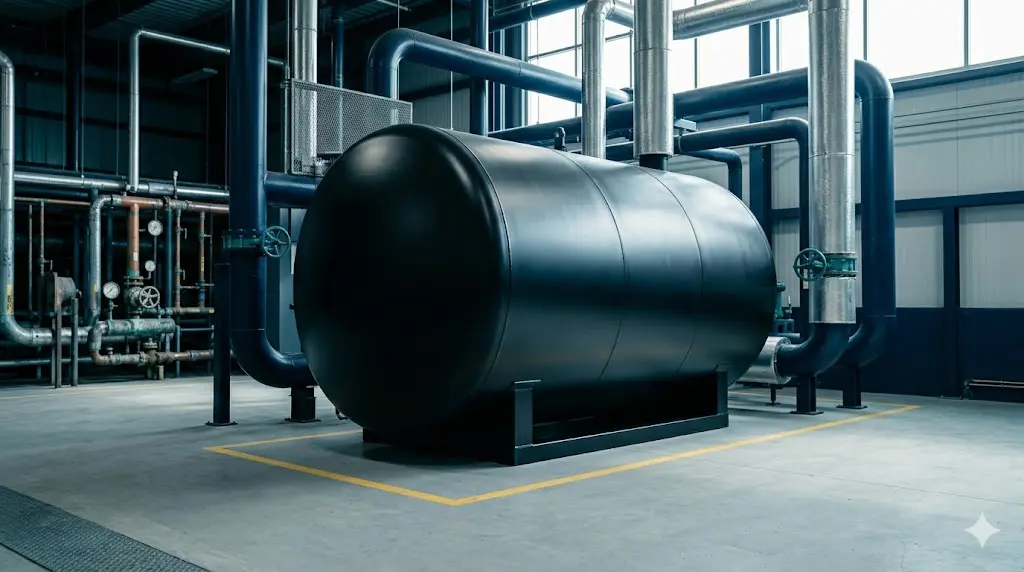
Boiler scale is a thermal insulator. It sits between the burner’s heat and the water it needs to heat, forcing the boiler to burn more fuel to produce the same steam output. A 1/16-inch scale deposit reduces heat transfer efficiency by around 12 percent. At 1/8 inch, the loss reaches 25 percent or more.
Most facilities don’t know how much scale is on their heat transfer surfaces until a scheduled cleaning. By then, the efficiency penalty has been running for months — absorbed into fuel costs without a clear diagnosis and written off as normal operating expense.
This post explains what boiler scale is, how it forms, what it actually costs at different thicknesses, and how to detect it before the next cleaning crew does.
Boiler scale is a mineral deposit that forms on the interior heat transfer surfaces of a boiler — primarily the waterside surfaces of heat exchanger tubes and the fireside walls — when dissolved calcium, magnesium, and silica compounds in the feedwater precipitate out of solution as the water heats and concentrates through evaporation. Scale is a poor thermal conductor, so even thin deposits significantly reduce the rate at which combustion heat transfers into the water, forcing the boiler to fire longer and consume more fuel to achieve the same steam production.
Scale forms when dissolved minerals in boiler feedwater become less soluble at high temperatures and precipitate out of solution. The primary scale-forming minerals are:
The rate of scale formation is driven by two variables: the concentration of scale-forming minerals in the makeup water (hardness and silica) and cycles of concentration in the boiler. Cycles of concentration is the ratio of dissolved solids in the boiler water to dissolved solids in the makeup water — it reflects how many times the water has concentrated through evaporation. A boiler running at 10 cycles of concentration has ten times the mineral content of its makeup water. As cycles climb without blowdown to control them, scaling tendency increases sharply.
A well-managed boiler water treatment program controls hardness through feedwater softening, manages cycles of concentration through controlled blowdown, and uses corrosion and scale inhibitors to keep residual minerals in suspension rather than allowing them to deposit on metal surfaces.
Scale builds when the treatment program drifts. A free water analysis checks whether your current program is keeping scale-forming minerals in check.
Schedule a Free Water Analysis →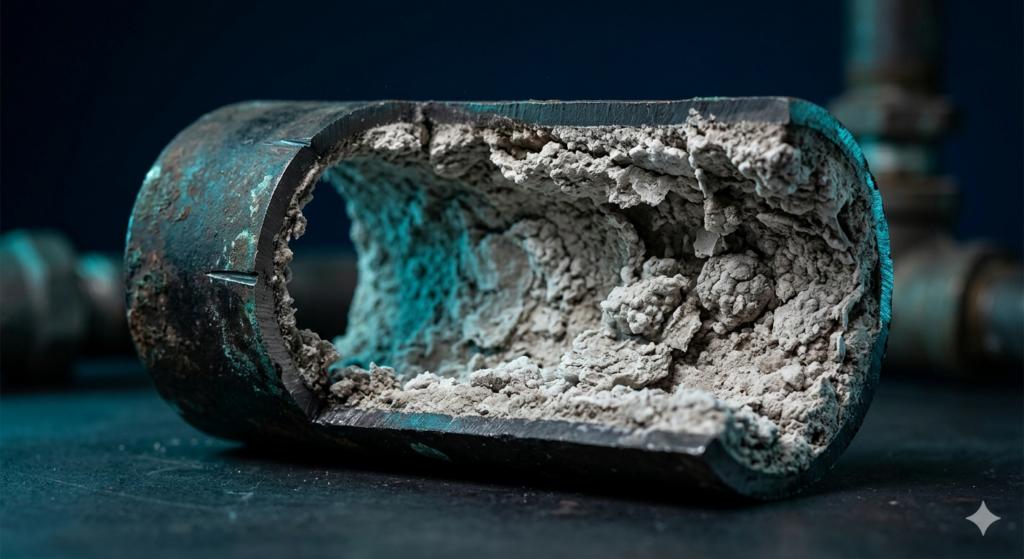
The efficiency impact of boiler scale is well-documented and directly tied to deposit thickness. Here are the representative efficiency losses by scale depth:
| Scale Thickness | Efficiency Loss | Approx. Fuel Cost Increase | Visual Indicator |
|---|---|---|---|
| No scale (clean) | Baseline (100% efficient) | Baseline | None |
| 1/32 inch (~0.8 mm) | ~5–7% | ~5–7% more fuel | Subtle discoloration only |
| 1/16 inch (~1.6 mm) | ~10–12% | ~11–14% more fuel | Visible light deposit, chalky surface |
| 1/8 inch (~3.2 mm) | ~23–27% | ~30% more fuel | Dense deposit visible, tube surface rough |
| 3/16 inch (~4.8 mm) | ~35–38% | ~55% more fuel | Thick scale layer, flow restriction possible |
| 1/4 inch (~6.4 mm) | ~45–50%+ | ~80–100% more fuel; tube failure risk elevated | Heavy scale; emergency cleaning likely needed |
Source: Efficiency figures derived from standard heat transfer engineering data for calcium carbonate and calcium sulfate deposits. Actual impact varies by scale composition, boiler type, and operating pressure.
Cycles above your target range means scale-forming minerals are concentrating faster than blowdown can remove them. See how a managed boiler water treatment program keeps them in check.
Explore Boiler Water Treatment →Waiting for a scheduled internal inspection to assess scale level is reactive. Several leading indicators are available between cleanings:
Boiler services that include routine blowdown water analysis track these indicators between cleanings and adjust the treatment program before scale accumulates to the point where it shows up as measurable efficiency loss. Digital remote monitoring extends visibility further, tracking conductivity and feed chemistry continuously between scheduled service visits.
Scale isn’t the only chemistry-driven failure that builds invisibly on heat-transfer surfaces — the same pattern of gradual, unmonitored degradation drives corrosion in closed loop systems, where inhibitor depletion does its damage long before anything is visible.
What we typically find when we first assess a boiler system that’s been operating without managed water treatment: measurable scale on heat transfer surfaces, cycles of concentration running above the program’s target, and a treatment program last reviewed at startup. The cleaning will happen. The question is how much fuel was burned while it was building.
ChemREADY offers a free on-site water analysis — we'll test your boiler water, review your treatment program, and give you a plain-English report on what we find. No obligation.
Schedule Your Free Water Analysis →800-229-6801
Book a 30-minute conversation directly. We'll discuss your water treatment situation and whether working together makes sense.
Book a 30-minute call →Take a look at our water treatment services first. See where you stand across chemical programs, system performance, and municipal compliance — then decide if a conversation makes sense.
Find out what a buyer would see →Browse everything we do in water treatment — chemicals, equipment, and services — at your own pace, no conversation required.
Explore our water treatment solutions →We work with advisors who encounter infrastructure gaps in municipal water and drinking water client businesses. If you're looking for a referral partner for pre-sale readiness work, let's talk.
Learn about our partner program →