ChemREADY

Reading Time | 10 Minutes
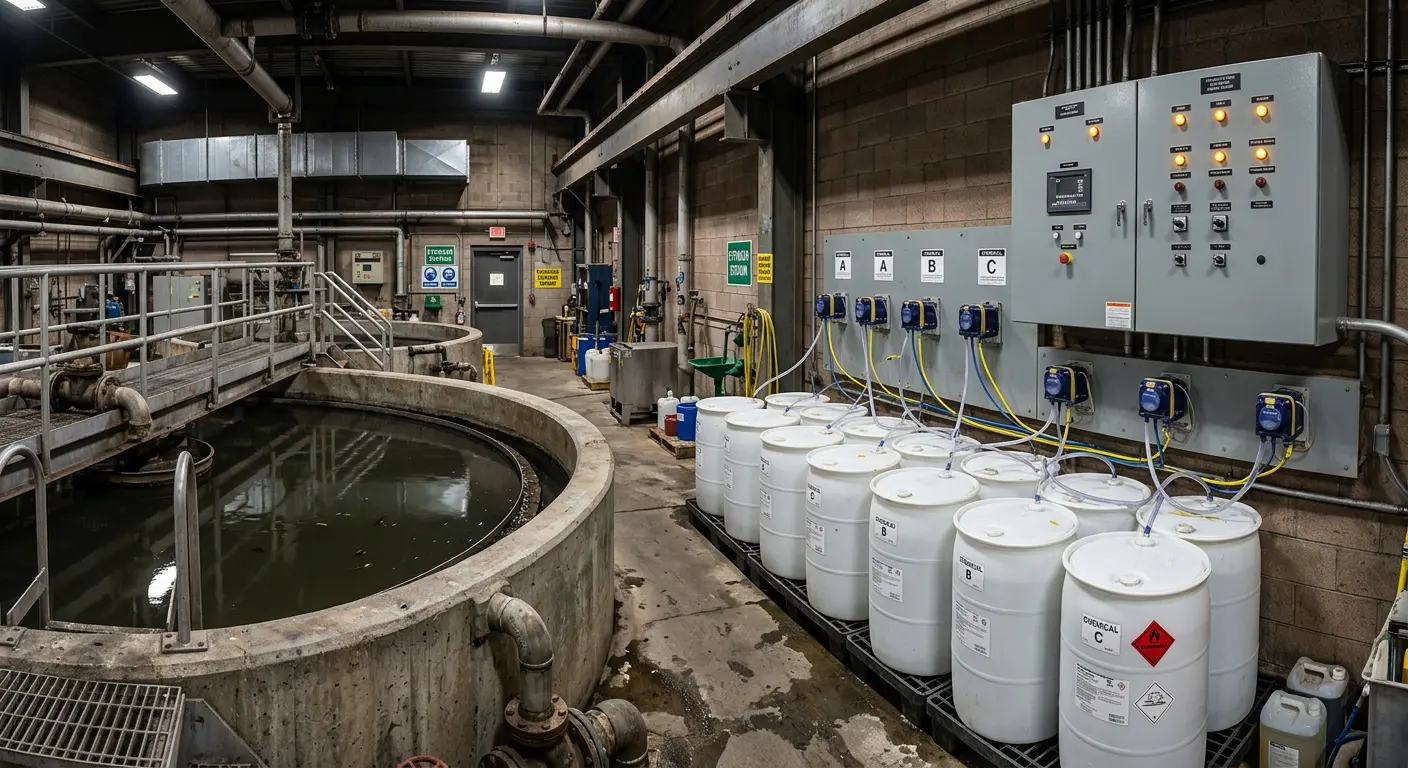
Most EHS directors think of an industrial pretreatment audit as something that happens to other facilities. Then the POTW calls to schedule one, and the scramble begins.
Pretreatment audits aren’t random. They’re triggered by specific, identifiable signals: your own monitoring reports, the treatment plant’s influent data, how you’ve handled past upsets, and a federal inspection schedule most facilities don’t realize applies to them. The facilities that consistently pass know what those signals are and run their programs accordingly. By the time the call comes, the audit is already about your records, not your intentions.
An industrial pretreatment audit is a compliance inspection in which the Control Authority — usually the local POTW — verifies that an industrial facility is meeting its discharge permit, local limits, and any categorical pretreatment standards. Inspectors review monitoring data, sampling procedures, and records, then walk the facility to confirm operations match what the permit assumes.
Findings can lead to a notice of violation, a compliance schedule, formal enforcement orders, or penalties. If you’re not sure whether your facility carries the extra oversight that comes with Significant Industrial User status, that’s the first thing to confirm, because it sets how often you’ll be inspected and what you have to report.
Five conditions reliably put facilities on the inspection schedule:
Inspectors arrive with a checklist and one question: is this program real, or just paperwork? Expect requests for most of the following.
| Record | What They’re Checking |
|---|---|
| Periodic compliance reports | Submitted on time (at least twice a year for most SIUs), complete, and signed and certified by an authorized representative |
| Raw lab data | Results in the reports match the lab reports behind them |
| Chain-of-custody forms | Every sample documented from collection to lab, with times and signatures |
| Sampling procedures | Correct sample type (grab or composite), location, and EPA-approved analytical methods for each parameter |
| Internal sampling logs | Internal data is consistent with what was submitted |
| Violation notifications | 24-hour notices were made and 30-day resample results submitted |
| Slug control plan and records | Plan exists if required, responsible people are named, past slug events were reported |
| Chemical inventory | Which process chemicals could reach the discharge |
| Process flow diagram | Where wastewater enters pretreatment, where it exits, and what bypasses it |
| Operator training records | Who samples and runs pretreatment, and whether they’re trained |
Records generally have to be kept for at least three years, and longer while any enforcement matter is open. If any row in that table would be hard to produce on short notice, that’s a finding waiting to happen.
ChemREADY wastewater testing programs build the sampling, lab data, and documented trend record an inspector expects to see, so audit day is a records review, not a scramble.
Explore Wastewater Testing Services →Inspectors don’t stay in the pretreatment room. They walk the production floor, looking at where process drains connect, whether floor drains route around your pretreatment system, where dilution water enters, and whether your designated sampling point actually represents your full discharge.
Experienced inspectors are good at spotting the gap between what the permit assumes and what’s happening on the floor. A sample pulled at the wrong point or the wrong time doesn’t satisfy the permit even if it was technically collected, and the sample type your permit specifies is an enforceable condition in its own right. Inspectors also take their own samples. A grab pulled during a high-strength production window measures exactly what you’re discharging at that moment, which is why facilities with clean composite data still get violations.
Parameters that swing with production are the usual culprits: pH, BOD, and fats, oils, and grease.
Every approved pretreatment program operates under an enforcement response plan that sets how it escalates. The details vary by Control Authority, but the sequence usually runs:
Knowing what sits downstream of a finding, not just the inspection itself, is what changes how EHS directors prioritize pretreatment program management.
Every approved pretreatment program operates under an enforcement response plan that sets how it escalates. The details vary by Control Authority, but the sequence usually runs:
Knowing what sits downstream of a finding, not just the inspection itself, is what changes how EHS directors prioritize pretreatment program management.
Facilities that pass consistently aren’t doing anything special when the inspector arrives. They run their programs every day as if an inspector is already there. That means:
What we typically find at facilities that just received a notice of violation: operations were generally solid, but nothing was formalized. Chemicals were being added and samples were going out, but there was no adjustment log, no corrective action procedure, and no chain-of-custody discipline behind the reports.
Digital remote monitoring closes much of that gap by recording pH, flow, and conductivity continuously, the same parameters the POTW watches at its headworks. When audit day comes, the record already exists. That’s the difference between a managed pretreatment program and a chemical supply arrangement, and the gap is almost always fixable before the next inspection, as long as you know it’s there.
ChemREADY offers free wastewater sample testing. Send us a sample and we'll tell you exactly what you're working with. No obligation. Or call 800-229-6801.
Request Your Free Wastewater Sample Test →An industrial pretreatment audit is a compliance inspection in which the Control Authority, usually the local POTW, verifies that an industrial facility is meeting its discharge permit, local limits, and any categorical pretreatment standards. Inspectors review monitoring data, sampling procedures, and records, then walk the facility to confirm operations match what the permit assumes. Findings can lead to a notice of violation, enforcement orders, or penalties.
Five conditions commonly trigger pretreatment inspections: a pattern of self-reported exceedances, anomalies in POTW influent data traced to your discharge, slug discharge or upset history, complaints or third-party reports, and the routine inspection cycle. Control Authorities are generally required to inspect and sample every Significant Industrial User at least once a year.
Inspectors review periodic compliance reports, the raw lab data behind them, chain-of-custody forms, sampling procedures, 24-hour violation notices and resample results, slug control plans, chemical inventories, process flow diagrams, and operator training records. They also walk the facility to confirm sampling points are representative and that floor drains and process lines don’t bypass pretreatment.
Enforcement follows the Control Authority’s enforcement response plan, typically starting with a notice of violation that requires a written response, then compliance schedules and administrative or consent orders for significant or repeated violations. POTWs must publish an annual list of users in significant noncompliance and must have authority to seek penalties of at least $1,000 per day per violation; inflation-adjusted federal Clean Water Act penalties now exceed $66,000 per day.
Run the program every day as if an inspector is present: keep reports and the lab data behind them producible within minutes, retain records for at least three years, write procedures for sampling, 24-hour violation notification, and slug discharge response, use chain-of-custody on every sample, and make sure operators know the documented procedures. Continuous monitoring of pH, flow, and conductivity creates a record inspectors can check against POTW influent data.
Get a free sample test and a plain-English read on where your discharge stands against your permit before the POTW takes its own sample.
Request Your Free Sample Test →Or call 800-229-6801
Continuous pH, flow, and conductivity monitoring shows the same picture your POTW sees at its headworks, as it happens.
See Digital Remote Monitoring →Testing, chemistry, adjustments, and documentation managed together, so the record an inspector wants is built as you go.
Explore Source-to-Discharge™ →Metals Fabrication → Food Processing → Mining & Minerals → Manufacturing →