Reading Time | 10 Minutes
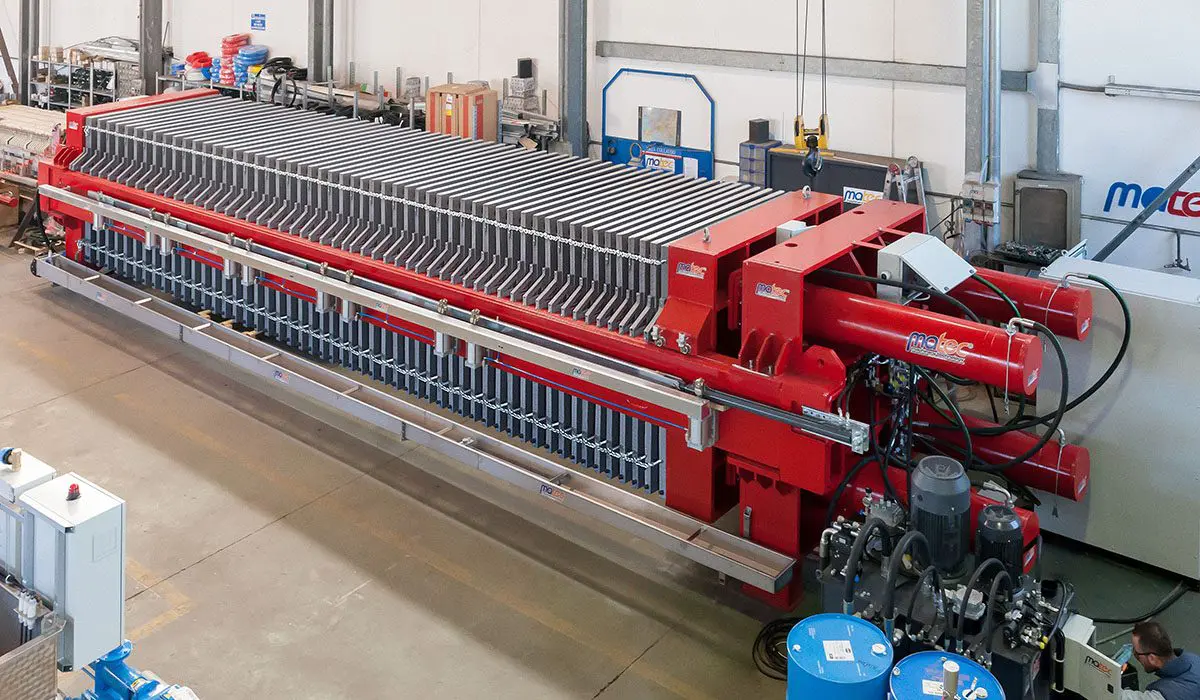
If your filter press cycle times have been creeping up since the temperature dropped, stop looking at the press. Filter press cold weather performance problems almost always trace back to two variables that degrade together as water gets colder: sludge viscosity and polymer reaction kinetics. Together they produce symptoms that look almost exactly like equipment failure.
That’s why this is one of the most consistently misdiagnosed problems in industrial dewatering. Maintenance replaces filter cloths. Operations turns up fill pressure. Someone adds more polymer. Nobody checks the temperature of the conditioning water or the polymer makedown, and the problem rides out the entire winter. If you’ve been through the equipment-or-chemistry question before, this is the seasonal version of it.
Here’s what’s actually happening, how to tell which variable is limiting you, and what to change.
A filter press runs slower in cold weather because colder water makes sludge more viscous and slows polymer flocculation. Water moves through the forming cake more slowly, and the floc holding the solids together is weaker. The result is longer fill times, longer cycles, and wetter cakes, even though nothing about the press itself has changed.
The two effects compound. Thicker sludge distributes less evenly across the plates, and weaker floc releases water less readily once it gets there. A press that ran comfortably in August can lose a meaningful share of its throughput by November without a single mechanical fault.
The press is not broken. The chemistry has changed.
Viscosity rises as temperature falls, and it starts with the water itself. Pure water at 45°F is roughly 35–40% more viscous than at 65°F. Filtrate flow through a cake is inversely proportional to viscosity, so at the same feed pressure, the press moves roughly a quarter less water per minute. Most industrial sludges are even more temperature-sensitive than clean water, because fines and organics thicken along with it.
| Water Temperature | Approx. Viscosity (cP) | Relative Filtrate Flow at Same Pressure |
|---|---|---|
| 77°F (25°C) | 0.89 | ~117% |
| 65°F (18°C) | 1.04 | 100% (baseline) |
| 55°F (13°C) | 1.20 | ~87% |
| 45°F (7°C) | 1.42 | ~73% |
| 35°F (2°C) | 1.67 | ~62% |
Viscosity values are for clean water from standard property tables. Sludge viscosity is typically higher and more temperature-sensitive.
On the floor, that viscosity shift shows up in three places:
Facilities running a filter press in an unheated or partially heated building, or feeding it from outdoor tanks and ponds, see the largest seasonal swing.
Polymer flocculation is a kinetic process: polymer chains have to uncoil, find particles, and bridge them into floc. All of that slows down in cold water. The same flocculant, dosed at the same rate as summer, produces smaller, weaker floc at 40°F.
The problem often starts before the polymer ever reaches the sludge. Emulsion and dry polymers need time to hydrate and uncoil in dilution water. Cold makedown water slows that process sharply, so polymer that hydrated fully in 20 minutes in July may still be partly coiled when it’s dosed in January. The result is a lower effective dose than the pump setting suggests. Polymer makedown and metering deserves as much attention in winter as the dose rate itself.
Weak, under-formed floc shows up as:
The instinctive fix is to add more polymer. That often backfires. Overdosed polymer produces a slimy, gelatinous cake that holds water and releases poorly. We cover the mechanism in how polymer works in a filter press, and why more makes it worse.
Use this table to identify which factor is most likely limiting your press, based on what you’re seeing:
| Symptom | Likely Cause | First Move |
|---|---|---|
| Long fill time, uneven cake thickness across chambers | Higher sludge viscosity | Log feed temperature; slow the fill ramp; warm conditioning water where possible |
| Wet cake with cloudy or turbid filtrate | Under-flocculation: polymer not fully hydrated, or not enough contact time | Check makedown water temperature and aging time; extend conditioning; jar test at current temperature |
| Wet, sticky or slimy cake, clear filtrate, poor release | Polymer overdose, often from compensating for the cold | Step the dose down; jar test a dose range |
| Cloth blinding faster than normal | Fines from weak floc, or excess polymer coating the cloth | Jar test first; then wash or inspect cloths |
| Cycle times creeping up since fall with no process change | Viscosity and polymer kinetics combined | Plot feed temperature against cycle time; re-baseline with a jar test |
If the table points to chemistry but you want a second read on the equipment side, our filter press walkthrough guide covers what the cake, filtrate, and cloths tell you on the floor.
Use this table to identify which factor is most likely limiting your press, based on what you’re seeing:
| Symptom | Likely Cause | First Move |
|---|---|---|
| Long fill time, uneven cake thickness across chambers | Higher sludge viscosity | Log feed temperature; slow the fill ramp; warm conditioning water where possible |
| Wet cake with cloudy or turbid filtrate | Under-flocculation: polymer not fully hydrated, or not enough contact time | Check makedown water temperature and aging time; extend conditioning; jar test at current temperature |
| Wet, sticky or slimy cake, clear filtrate, poor release | Polymer overdose, often from compensating for the cold | Step the dose down; jar test a dose range |
| Cloth blinding faster than normal | Fines from weak floc, or excess polymer coating the cloth | Jar test first; then wash or inspect cloths |
| Cycle times creeping up since fall with no process change | Viscosity and polymer kinetics combined | Plot feed temperature against cycle time; re-baseline with a jar test |
If the table points to chemistry but you want a second read on the equipment side, our filter press walkthrough guide covers what the cake, filtrate, and cloths tell you on the floor.
ChemREADY's dewatering team runs on-site jar testing at your actual cold-weather sludge temperature and tunes polymer type, dose, and makedown to match. That way the seasonal adjustment happens before the cycle times climb.
Explore Dewatering Optimization →Wet filter cakes in cold weather are almost always caused by polymer performance: under-flocculation from cold makedown and slow kinetics, or overdosing in response to it. Inadequate pressing pressure and worn cloths are rarely the cause. The distinction matters because the fixes are completely different, and the press-side fixes cost money without solving anything.
Adding pressure does not improve cake moisture when floc quality is the limit. Replacing cloths doesn’t help either, unless the cloths were already the problem. You can tell they were if filtrate was turbid in summer too. We break down the cake side in more detail in why filter press wet cakes are almost always the polymer.
A jar test is the fastest way to confirm what’s going on. The key for winter diagnosis is to run it at current operating temperature. If the sample warms up to lab temperature, you’re testing summer conditions.
A polymer program tuned for August sludge at 65°F often needs adjustment for sludge at 45°F. That isn’t a defect in the program. It’s a predictable seasonal variable, and it should be planned for, not discovered.
Improving filter press performance in cold weather means fixing the root cause, whether that’s sludge viscosity, polymer kinetics, or both. Adjusting press settings that don’t touch the chemistry won’t get you there. Work through it in this order:
Step 1: Diagnose the limiting factor. Use the symptom table above. If the answer isn’t clear, the jar test will settle it.
Step 2: Address viscosity on the feed side.
Step 3: Address polymer kinetics.
Step 4: Change one thing at a time. Log cycle time, cake moisture, and feed temperature after each change. If you change three things at once, you can’t tell what worked.
Step 5: Build a seasonal baseline. Track those metrics weekly from fall through winter. Dewatering monitoring makes this automatic, and the data becomes next year’s starting point. You’ll adjust in October instead of reacting in January.
This is the practical difference between a managed dewatering program and a chemical delivery arrangement: seasonal adjustments don’t make themselves. Someone has to see the temperature coming and retune the chemistry before the cakes get wet. If you’re newer to the equipment side, our primer on how a filter press works covers the fill, press, and release cycle referenced throughout this post. For cloth or hardware issues the jar test rules out, dewatering maintenance and support covers the mechanical side.
ChemREADY's free on-site water analysis covers your sludge, polymer program, and dewatering system, with a plain-English report on what cold weather will change and what to adjust. No obligation. Prefer to talk it through? Call 800-229-6801.
Schedule Your Free Water Analysis →A filter press runs slower in cold weather because colder water makes sludge more viscous and slows polymer flocculation. Water at 45°F is roughly 35–40% more viscous than at 65°F, which reduces filtrate flow through the cake at the same pressure, while weaker floc releases water less readily. The result is longer fill times, longer cycles, and wetter cakes without any mechanical fault.
Cold water slows both polymer hydration during makedown and the flocculation reaction with sludge particles. The same dose produces smaller, weaker floc, which leads to wetter cakes, turbid filtrate, and faster cloth blinding. Warming dilution water, extending aging and conditioning time, and re-jar-testing at current temperature restore performance.
Wet filter cakes in cold weather are most often caused by polymer performance: under-flocculation from cold makedown water and slower reaction kinetics, or overdosing in response to it. Inadequate pressing pressure and worn cloths are rarely the cause. Turbid filtrate points to under-flocculation; a sticky cake with clear filtrate points to overdose.
First diagnose whether sludge viscosity or polymer kinetics is limiting performance. For viscosity, slow the feed ramp and warm the feed where possible. For polymer, warm the dilution water, extend aging and conditioning time, and jar test at current temperature to confirm polymer type and dose. Change one variable at a time and track results to build a seasonal baseline.
Pull a fresh sludge sample and keep it at operating temperature. Make up polymer with the plant’s actual dilution water and aging time. Test the current dose plus a range above and below it, then compare floc size, settling rate, and clarity against the summer baseline. In winter, testing at lab temperature instead of operating temperature gives misleading results.
Book a free on-site water analysis and a review of your polymer program ahead of the cold months.
Or call 800-229-6801
Cationic, anionic, and non-ionic FlocREADY flocculants, selected by jar testing against your actual sludge.
Preventive maintenance, cloth and plate replacement, and rapid response for filter presses, pumps, and hydraulics.
Mining →
Aggregates →
Concrete Slurry →
Industrial Wastewater →
